How to Motivate Employees: Leadership vs. Impedership
Employees don’t leave jobs; they leave their managers. According to Gallup, 50% of employees who leave a job do so to get away from their manager.
What makes an employee walk away from a job they love because of their manager? It’s a simple answer, but unfortunately, a common problem. The answer... a manager who exemplifies impedership instead of showing leadership.
What Is Impedership?
Impedership, a term coined by business writer, Dale Dauten in 2007, means “the art of demotivating employees.” It’s the exact opposite of leadership, which supports employee success. “Impeders” lack trust in employees and the quality of their daily work. Sadly, these powers that be create obstacles instead of removing them.
Types of Impeder Behaviors
When managers consistently exhibit impedership behaviors, they can undermine the employees' sense of purpose, happiness, job satisfaction, full potential, and career success, resulting in decreased confidence, disengagement, lower productivity, and retention issues. Examples of impedership behaviors include:
- Hovering
- Micromanaging
- Stiffling new ideas
- Delegating menial tasks
- Failing to share clear goals
- Not offering encouragement
- Preventing a sense of ownership
- Saying discouraging comments
- Setting unrealistic expectations
- Repeatedly looking for mistakes
- Frequently requesting status updates
- Disguising public shaming as feedback
There are many other behaviors that fall under impedership as well.
A common management misstep is failing to recognize employees' efforts. When good work goes unnoticed, and mistakes get more attention, employee motivation and engagement drop. They’ll ultimately spend their days either seeking approval for every action or keeping their head down and nose to the grind. Opportunities for problem-solving, brainstorming, and innovating will therefore be few and far between.
Impedership Negatively Affects Everyone
Clearly, impedership does more than just affect the employees on the receiving end. It negatively impacts the work environment.
Cross-functional team projects slow down and suffer. Not only does it affect the success of projects and the growth of employees and companies, but it can also undermine the entire workplace culture by creating fear, reducing trust, and contributing to a toxic work environment.
Leadership and Employee Motivation
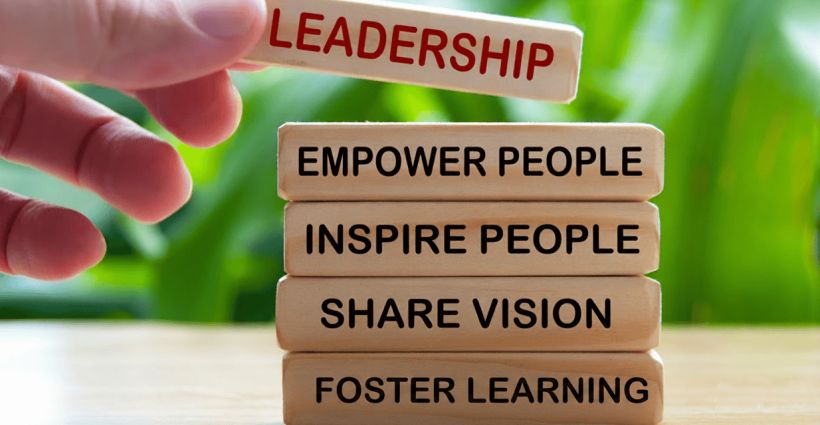
Great leaders know how to motivate employees. It starts by mapping out where the team needs to "win" and setting strategic goals as a team. Not by the leaders setting organizational goals themselves and then delegating tasks to team members. Effective leadership unleashes the team's talents to meet those goals, motivating them along the way and removing roadblocks.
"Real leadership is when everyone else feels in charge." - often attributed to Bono, musician and activist
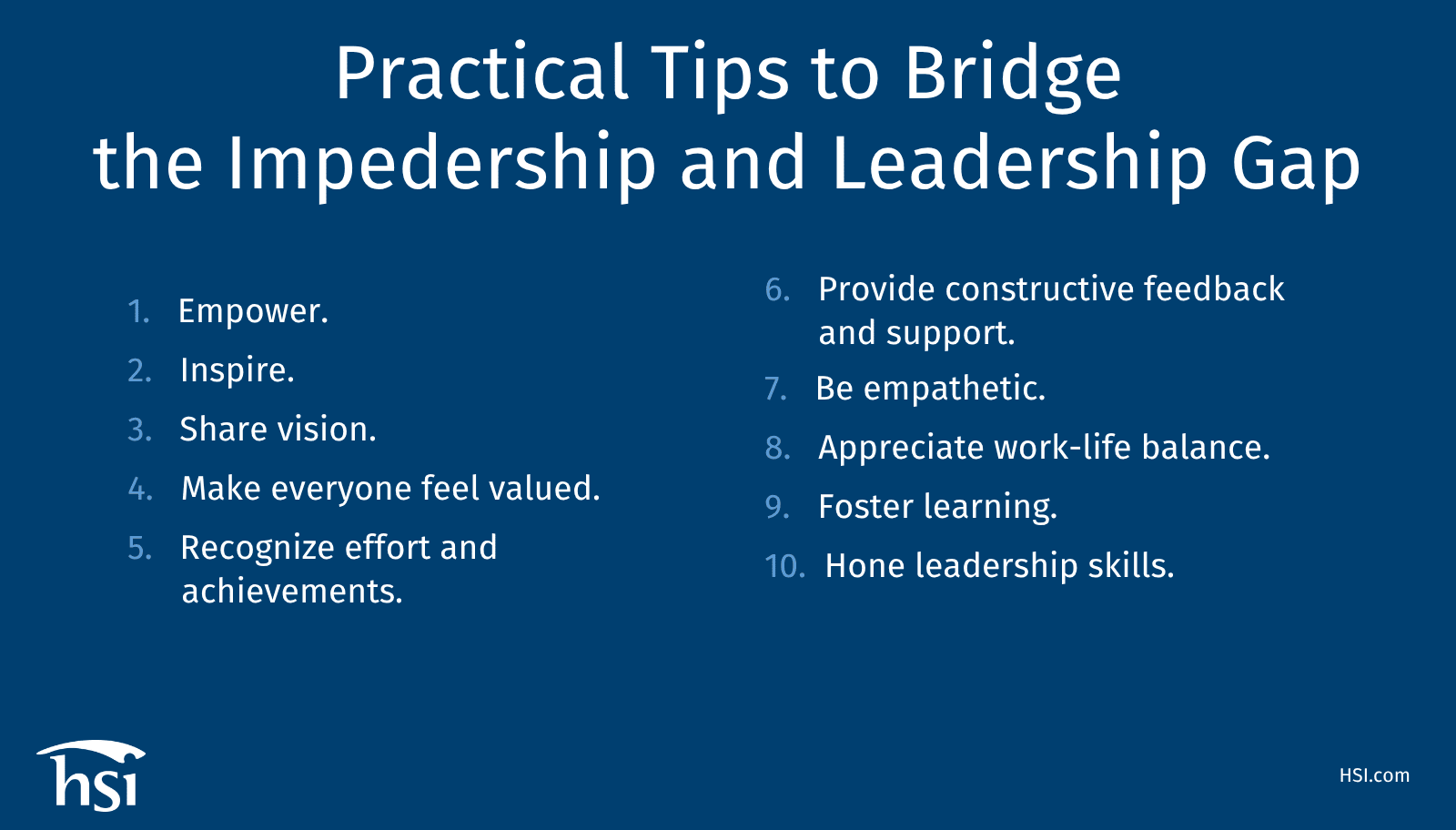
Ten Tips on Motivating Employees by Being a Leader, Not an Impeder
Business leaders don’t want to admit they're an impeder. It's often easier to blame employees, circumstances, or challenges than to take an honest look at how leadership behaviors may affect employee engagement and team performance.
The good news is that impedership behaviors can be replaced with leadership practices that motivate employees, cultivate trust, and build a positive work environment.
A helpful place to start is understanding what employees need most from their leaders. According to Culture Amp's 2025 workplace benchmark analysis, the strongest drivers of employee engagement are confidence in leaders, leaders demonstrating that people matter, and opportunities for employee development.
Employees are most engaged when they trust leaders, feel valued, and see opportunities to grow.
"The primary job of a leader is to inspire greatness in their team members." - Matt Tenney, leadership expert and author of Inspire Greatness
These practical tips can help leaders bridge the gap between impedership and leadership:
- Empower. Encourage autonomy and ownership. Coach, don't talk down or micromanage. Employees want responsibility for their projects they’re assigned. This shift takes practice and support. HSI offers online training to help leaders build the skills that drive stronger employee performance.
- Inspire. Have open conversations. Instead of talking at employees, ask questions, share perspectives and insights, recognize good work, and offer advice. Inspiring employees starts with clear communication and active listening. Sounds simple but it’s not always easy to put into practice. HSI offers online training to develop communication skills.
- Share vision. Explaining the company and department goals gives employees a clear understanding of how their role contributes to the bigger picture. Don’t withhold additional information. When employees see that their contributions matter, it creates a more enthusiastic and committed workforce. With a shared vision, upskill training can be provided to team members as needed.
- Make employees feel valued. Show they matter. Communicate daily. Acknowledging someone goes a long way. Even if it's just saying hi. Distant managers make employees feel neglected and unappreciated. HSI’s virtual leadership training shows how to guide and inspire in person and virtually.
- Recognize effort and achievements. Tell them what they did well. Don’t just say, “Good job.” At review time, reward hard work with promotions or bonuses. Learn more about providing impactful praise by reading HSI’s blog.
- Provide constructive feedback and support. Build confidence with consistent, transparent feedback. Don’t reprimand. Allow employees to learn from their mistakes and provide guidance when needed. Always offer positive reinforcement. When feedback is delivered appropriately, it drives stronger performance. Learn how HSI’s feedback training helps leaders turn feedback into real results!
- Be empathetic. Be compassionate and understanding during challenging times. Don’t punish employees for less-than-100% performance during personal tough times. Want to lead with more empathy? Read HSI’s blog on empathetic leadership.
- Appreciate work-life balance. Don't overload employees with piles of work. Find a balance to prevent job burnout. This leads to productive employees but treats them as valuable team members. Employee job satisfaction rates will most likely improve when employees have a healthy work-life balance. Help your teams work smarter with HSI’s productivity courses.
- Foster learning. Invest in employee development. Progressive organizations set employee growth goals. Proper training and development can significantly enhance employee engagement by nurturing talent and improving performance. When highly engaged employees have the skills to grow, they are more likely to be energized and satisfied with their organization. Download HSI’s whitepaper, on L&D and company culture to learn how to keep employees engaged and advancing in their careers.
- Hone leadership skills. No one is perfect, including leaders. Great leaders admit this and always look for effective ways to improve their leadership skills. Having a mentor and taking online leadership training are simple steps in the right direction.
HSI Can Help
According to Gallup, managers account for at least 70% of the variance in team engagement. Leadership development is a key retention strategy.
HSI’s leadership development training courses allow HR and L&D leaders to curate a curriculum focused on authentic leadership development, transformational leadership, psychological safety, communication, DISC leadership skills, team building, and much more, including a wide range of soft skills.
If you would like to learn more about HSI, request a consultation.
Related Articles
A Comprehensive Guide to Leadership Training
What a comprehensive leadership training program looks like and how it shapes and champions successful employees and...
Employee Training & Development

Why Communication Belongs at the Center of Leadership
Strong leadership demands clear communication. Learn why L&D must prioritize communication training to drive alignment,...
Employee Training & Development
Effective Coaching Techniques in the Workplace: Tips to Ignite Potential
Learn effective coaching techniques leaders can use to build trust, develop employees, and create high-performing teams.
Employee Training & Development