HSI Intelligence: The AI Platform Connecting EHS, Compliance, and Training

HSI Intelligence embeds AI directly into the HSI Platform, connecting EHS data and training in one system. This allows teams to move from incident reporting to corrective action and training without switching tools. Sky is one part of this system, giving users fast, context-aware answers based on real safety data. The result is a more connected, proactive approach to managing risk and preventing incidents.
Why Do Standalone AI Tools Fall Short in EHS Compliance Workflows?
Standalone AI tools operate outside of core safety workflows. They can answer questions or summarize information, but they don’t connect to the systems where safety work actually happens.
In real safety programs, work follows a sequence. An incident triggers an investigation, which leads to corrective actions, and often results in updated training. Each step builds on the last and depends on accurate, connected data.
For example, a near miss might be reported, logged, reviewed against past incidents, and followed by corrective actions and refresher training. That process spans multiple records and systems, all of which need to stay aligned.
This is where standalone AI tools fall short. They can deliver information, but they can’t follow the full workflow or connect incidents, actions, and training in a meaningful way.
As a result, teams get answers without clear next steps. The gap between insight and action remains, which limits how much AI can improve real safety outcomes.
That gap makes one thing clear. AI only works in safety when it connects the full workflow, not just the data.
What Is HSI Intelligence and How Does It Work Across EHS and LMS Systems?
HSI Intelligence is an embedded AI system built into the HSI Platform. It connects EHS and LMS systems so safety data, workflows, and training all operate in one place.
It runs on patented AI designed specifically for workplace safety and training. This allows it to understand how safety data connects across incidents, corrective actions, and training, so it can support decisions, not just generate answers.
HSI Intelligence supports core safety tasks like incident analysis, hazard identification, corrective action recommendations, and training alignment. These capabilities work together inside the platform, using real data to guide what teams should do next.
For example, if similar incidents start to appear across multiple sites, the system can identify the pattern, suggest corrective actions, and recommend targeted training for the teams involved. This all happens within the same workflow, without switching systems or losing context.
Because everything operates inside the platform, HSI Intelligence connects safety records, compliance activity, and training instead of treating them as separate pieces. This helps organizations manage safety as an ongoing process, where data, decisions, and learning stay aligned.
But a system like this only matters if teams can actually use it in their day-to-day work.
How Does Sky Fit Into the HSI Intelligence Ecosystem?
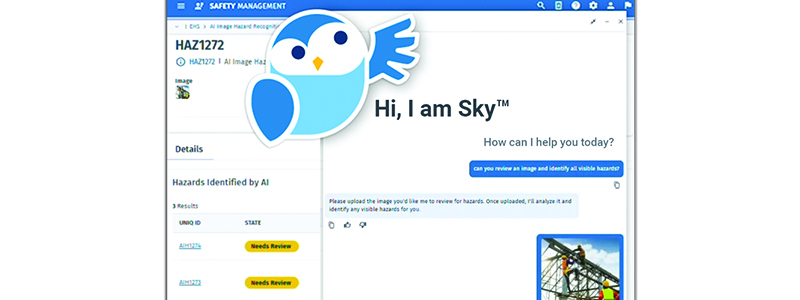
Sky is the AI assistant built into the HSI Platform. It gives safety teams a direct, simple way to interact with their data and take action without switching between systems.
With Sky, users can ask questions in plain language and get responses based on real safety data, company policies, and training history. This makes it easier to understand what’s happening in the moment and decide what to do next.
For example, a safety manager can ask which hazards are increasing at a specific site. Sky can analyze recent incidents, identify patterns, and suggest corrective actions, then point to training that helps address those risks.
Sky also supports hazard identification through image analysis. A user can upload a photo from the field, and Sky can flag issues like missing PPE, blocked exits, or unsafe conditions, along with recommended next steps.
Because Sky sits on top of connected data and workflows inside the HSI Platform, it can deliver guidance that reflects actual operations. This helps teams move from questions to action faster, with less effort and more confidence.
When access becomes that simple, the real question shifts from finding information to acting on it.
How Does HSI Help Turn Safety Data Into Action?
Most safety teams don’t struggle with collecting data. They struggle with using it in time to make a difference.
HSI changes that by turning connected data into clear next steps. Instead of reviewing reports after the fact, teams can respond to risks as they emerge and act within the same workflow.
With HSI, teams can:
Move from incident to corrective action without leaving the system
Spot patterns early and address risks before they repeat
Trigger training based on real events, not static schedules
Keep records aligned with what’s actually happening in the field
Give supervisors clear guidance they can act on immediately
This helps teams respond to risks as they happen, so decisions stay close to the work and actions happen faster.
If your safety data isn’t driving action today, it’s creating risk tomorrow. See how the HSI Platform connects your data, training, and workflows so your team can act with clarity, speed, and confidence.
FAQ
What is HSI Intelligence and how does it work?
HSI Intelligence is the AI layer built into the HSI Platform. It connects EHS data, training records, and compliance workflows in one system. This allows teams to analyze incidents, assign corrective actions, and deliver training without switching tools.
How is Sky different from other AI safety tools?
Sky is not a standalone chatbot. It works inside the HSI Platform and uses connected safety data, policies, and training content. This allows it to give answers that reflect real operations, not just general information, and helps teams take action faster.
Why does connecting EHS and LMS systems improve safety outcomes?
Safety programs rely on linked processes like incident reporting, investigation, corrective action, and training. When EHS and LMS systems connect, organizations can tie incidents directly to training and prevention efforts. This helps reduce repeat risks and supports OSHA training requirements.
What are the limitations of standalone AI tools in EHS?
Standalone AI tools often lack access to full safety records and workflows. They may answer questions but cannot connect incidents, corrective actions, and training. This can lead to gaps in decision-making and limit their value in regulated environments.
How does AI support incident investigation and prevention?
AI can review past incidents, identify patterns, and suggest corrective actions based on data. When embedded in a safety platform, it can also connect those actions to training and compliance records. This helps organizations move from reacting to incidents to preventing them.
Related Articles
Trusted AI in Safety Software Explained
What Is Trusted AI in EHS software?
Workplace Safety
Five Ways to Turn AI Safety Data into Action
How AI Connects Hazards, Actions, and Training
Workplace Safety
How AI Connects LMS and EHS Systems to Simplify Safety Management
How AI Integration Bridges LMS and EHS Systems for Safety
EHS Environmental, Health & Safety
