How Large Loads Are Reshaping Grid Reliability: Key Takeaways from NERC’s Latest White Paper
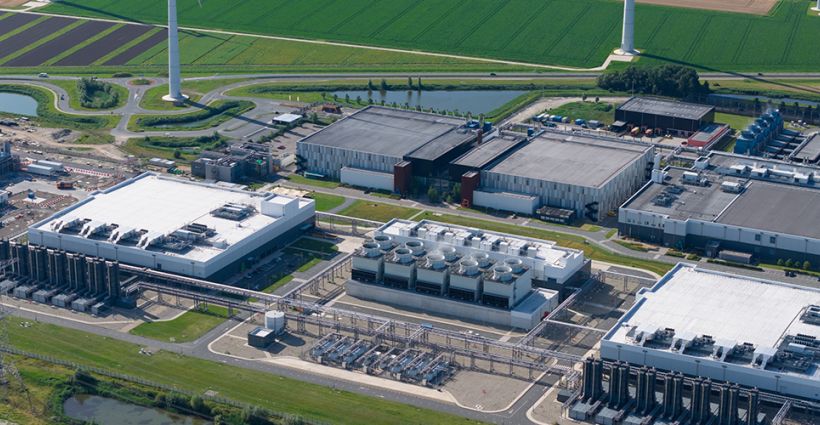
The rapid growth of large energy loads from data centers and AI infrastructure is creating new reliability challenges for the Bulk Power System (BPS).
In response, the NERC Large Loads Working Group recently released a second white paper outlining critical gaps in current standards and practices.
The HSI NERC Standards Compliance team analyzed the report and identified the most important risks utilities and registered entities need to understand now.
What Are Large Loads and Why Do They Matter?
Large loads refer to high-demand facilities such as hyperscale data centers, AI training operations, and energy-intensive industrial sites. These loads can:
- Ramp up quickly
- Operate with unique load profiles
- Introduce new dynamics to grid stability
Unlike traditional demand, large loads often evolve faster than existing grid planning and compliance frameworks can accommodate.
Data and Visibility Gaps
A lack of standardized, shared data is a significant risk to reliability.
- Data transparency and standardization gaps limit operators’ ability to assess system impacts
- Data sharing limitations prevent coordination between utilities and large load operators
- Insufficient data collection requirements leave real-time operators unaware of emerging risks
- Modeling challenges occur due to limited information about large load equipment and behavior
Why it matters: Without accurate and timely data, forecasting, planning, and real-time operations are significantly less reliable.
Planning and Forecasting Challenges
Traditional planning approaches don’t keep pace with large load development.
- Forecasting limitations come from lack of historical data and restricted information sharing (e.g. load profiles, ramp rates)
- Planning misalignment occurs because large loads can connect much faster than typical planning cycles anticipate
Why it matters: Utilities may not be prepared for near-term system impacts, increasing reliability risk.

Operational and Engineering Risk
Large loads introduce new technical challenges that existing practices don’t completely address.
- Protection coordination gaps: Transmission Operators and large load facilities often use independent protection schemes. Action on one side can unintentionally trigger the other.
- Engineering practice gaps including:
- Integrating large loads into EMS and modeling tools
- Uploading as-built data before energization
- Verifying communication pathways
- Monitoring for power quality and oscillations
- Coordinating planned outages
- Oscillation risks: Large loads can introduce forced oscillations (0.1-30 Hz), either unintentionally or through operational processes such as AI workloads
Why it matters: These issues can lead to instability, misoperations, and cascading reliability events.
Communication and Coordination Gaps
A lack of structured communication across stakeholders creates risks across the entire system.
- Limited coordination between:
- Load owners
- Transmission Operators
- Transmission Planners
- Regulators and local authorities
- Gaps exist across all project phases:
- Interconnection planning
- Site development
- Energization
- Ongoing operations
Why it matters: Misalignment between stakeholders increases the likelihood of operational errors and delays.
Governance and Compliance Gaps
Large load entities are not always subject to the same requirements as registered entities.
- They are not bound by NERC data request requirements such as Section 1600
- This gap limits visibility during event analysis and root-cause investigations
Why it matters: Critical information may be unavailable when analyzing grid disturbances.
Mitigation Gaps
Current Reliability Standards and interconnection requirements do not fully address large load impacts.
Why it matters: Without updated standards, it’s difficult to mitigate known risks as large load adoption accelerates.
What This Means for Registered Entities
Organizations taking a proactive approach will be better positioned to maintain reliability and adapt to future regulatory changes. Key actions include:
- Improving data sharing and transparency practices
- Enhancing modeling accuracy and validation processes
- Strengthening coordination with large load customers
- Reviewing protection schemes and engineer standards
- Preparing for new and evolving NERC requirements
Who Should Pay Attention?
This issue is particularly relevant for:
- Reliability Coordinators
- Balancing Authorities
- Transmission Operators
- Transmission Planners
- Planning Coordinators
- Compliance and engineering teams

Frequently Asked Questions
What risks do large loads pose to the power grid?
Large loads can bring rapid demand changes, oscillations, and coordination challenges that increase the risk of instability, if not properly managed.
Why are current NERC standards insufficient?
Existing standards were not designed for the speed, scale, and operational complexity of modern large loads such as AI data centers.
How should utilities prepare?
Utilities should focus on improving data sharing, updating planning practices, enhancing modeling, and strengthening coordination with large load operators.
Looking Ahead
NERC is actively working to develop new standards to address these gaps. However, you don’t need to wait. By identifying and addressing internal gaps now, you can reduce risk, improve reliability, and stay ahead of regulatory changes.
Final Thought
The rise of large loads represents one of the most significant shifts in grid demand in decades. Organizations that adapt quickly will be best positioned to navigate this transition successfully.
Related Articles
Understanding NERC PRC-029-1 and PRC-030-1: New Standards for Inverter-Based Resources
NERC’s new standards PRC-029-1 and PRC-030-1 set the stage for how IBRs must perform during and after grid disturbances.
Industrial Skills
Q&A: Insights from Industry Experts on NERC's 2024 CIP Themes and Lessons Learned
Learn key gaps in compliance programs and essential insights to improve the security and reliability of the Bulk...
Industrial Skills

NERC Standards Under Development – Interesting Yes, Surprising No
Industrial Skills