Don’t Forget the First Aid Kit: Tips for Spring Break Trips and Family Getaways
Spring break is one of the busiest travel seasons of the year. Families pack up the car for a road trip, board flights to warm destinations, or head outdoors for long-awaited family vacations. Whether you’re visiting a favorite destination or exploring somewhere new, these trips are meant to be relaxing and memorable.
But travel also means leaving behind some of the conveniences of home. Long travel days and new environments can sometimes lead to health issues along the way. A twisted ankle on a trail, a painful sunburn after hours at the beach, or motion sickness on a boat ride can quickly interrupt an otherwise great time.
Most travel hiccups are small, but they’re much easier to handle when you’re prepared. Packing a good first aid kit and thinking through a few “what if” scenarios before you leave can help keep small problems from turning into more serious medical issues.
Why first aid should be part of your travel planning
When you’re at home, medical care is usually easy to access. Pharmacies, urgent care clinics, and emergency departments are often nearby, so you likely know exactly where to go if health concerns arise.
Travel plans can look very different. Whether you’re exploring a remote location, passing through busy public areas, or navigating unfamiliar places, medical help may not always be immediately available.
If your plans include international travel, preparation becomes even more important. Different countries may have unfamiliar healthcare systems, limited pharmacy access, or different rules about medications. Researching medical care options before you leave can help avoid delays if someone needs treatment.
Even domestic travel can introduce new safety concerns. Outdoor activities and unfamiliar surroundings can increase the chances of things like sunburn, dehydration, or minor injuries during busy travel days.
Having a well-stocked family first aid kit and knowing how to respond in case of emergencies can help travelers address common issues quickly and confidently.
How to build a travel-friendly first aid kit
A basic first aid kit is a smart starting point for any trip. Most kits already contain the supplies needed to treat everyday issues like small cuts and blisters.
Standard first aid kits typically include items such as:
- Adhesive bandages (variety of sizes)
- Gauze pads
- Medical tape
- Alcohol wipes
- Antibiotic ointment
- Instant cold packs
- Disposable gloves
- Other wound cleaning supplies
These tools make it easy to clean and protect wounds that might occur during family adventures, such as a scraped knee or minor injury from a playground fall.
You may also want to include a few family-focused items such as children’s pain relievers, cold medicines, hydrocortisone cream, calamine lotion, and aloe vera gel. These items help address common travel issues such as bug bites, upset stomachs, sunburn, and other minor health concerns that can slow you down.
First aid tips for different types of travel
Since every trip is a little different, the duration of your trip, your travel destination, and the specific needs of the people traveling with you should all influence what you add to your family first aid kit.
Planning ahead for your destination and mode of travel can help reduce unnecessary stress during family trips.
Planning for road trips
While long drives can be part of the adventure, spending hours in the car can also create its own set of challenges. Motion sickness, dehydration, and general travel fatigue are common during road trips, especially for children.
Consider adding a few helpful items to your travel bag or first aid kit, such as motion sickness medication, electrolyte drinks, healthy snacks, and extra instant cold packs.
Additionally, you can make your trip more comfortable and safer for the whole family by:
- Keeping your first aid kit within easy reach in the vehicle rather than packed under luggage.
- Bringing extra water and snacks to help prevent fatigue and dehydration.
- Planning regular stops so everyone can stretch and take bathroom breaks before restlessness becomes a distraction for the driver.
Small preparations like these can help keep long drives running smoothly from the first mile to the last.
Air travel considerations
Air travel often leaves travelers feeling tired or run down after navigating crowded terminals, spending hours in close quarters, and managing delays or long travel days.
In addition to your standard first aid kit, consider packing a few extra items in your carry-on bag such as:
- Hand sanitizer and antibacterial wipes
- Extra face masks
- Nausea and headache medication
- Healthy snacks and a refillable water bottle
- Chewing gum to help relieve ear pressure
Wiping down tray tables, armrests, and seatbelt buckles can help reduce exposure to germs during flights. Keeping medications and other essentials easily accessible can also make it easier to address travel discomforts while in the air.
It’s also important to pay attention to any medications you pack. Before leaving, take a few minutes to check expiration dates and make sure medications are clearly labeled with dosage information. If you’re bringing over-the-counter (OTC) or prescription medications, keep them in their original packaging to avoid confusion and prevent issues when traveling through airport security or across international borders.
Train travel and public transportation
Train travel can be a relaxing way to reach your destination, but long rides and shared spaces still come with a few extra considerations. Since your first aid kit will likely be packed away in luggage, keeping a few essentials (e.g., tissues, hand sanitizer, and adhesive bandages) in a small travel pouch can make it easier to access. Comfort items such as snacks, small games, or books can also help keep children relaxed during longer rides and reduce the temptation to move around the train car while it’s in motion — helping prevent unnecessary bumps or falls.
Boating and water activities
Many spring family trips include time on the water, whether that’s boating, swimming, or relaxing at the beach. Prolonged sun exposure and other outdoor elements (e.g., insects and slippery surfaces) can increase the risk of sunburn and injuries from rocks or docks.
Items like sunscreen, insect repellent, waterproof adhesive bandages, and UV-protective clothing or wide-brim hats can be helpful additions to your first aid kit or beach bag.
Prevention is key during water activities. Wearing a properly fitted life jacket when boating or spending time around open water can significantly reduce the risk of serious accidents. It’s also important to stay hydrated and watch for symptoms of dehydration or heat exhaustion during long days in the sun.
Camping and outdoor adventures
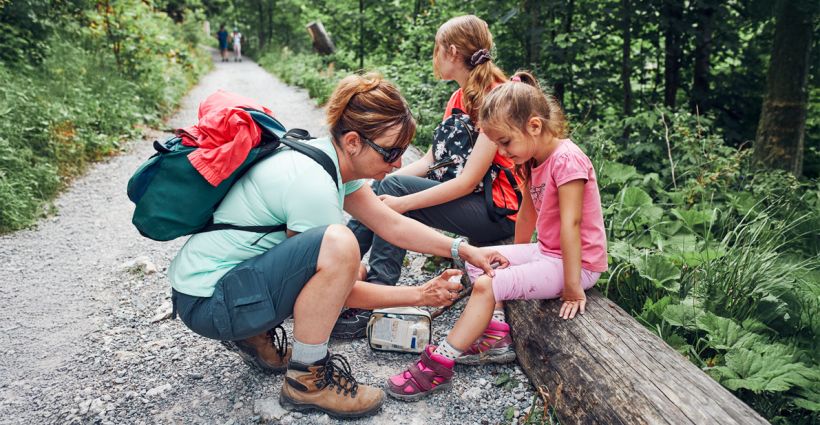
Camping and hiking trips may place you a long way from immediate medical help, making a first aid kit essential. Uneven trails, long hikes, and campsite activities can lead to issues like blisters and sprained ankles or knees. Minor burns can also happen around campfires and portable stoves. Insects and wildlife can create additional challenges in outdoor environments. Mosquito bites, bee or wasp stings, and tick bites are common in wooded or grassy areas where many campsites and hiking trails are located.
Along with your standard first aid kit, consider adding blister treatment supplies, tweezers for splinters or ticks, a compact emergency blanket, extra wound care materials, and a variety of medications (e.g., antacids, aspirin, ibuprofen, acetaminophen, and allergy relief) to help manage common outdoor injuries and illnesses.
For longer trips into remote areas, reviewing recommendations for wilderness first aid kits can help you better prepare for outdoor environments.
Planning ahead can also help prevent problems before they start. Wearing supportive footwear, bringing plenty of water, and pacing activities appropriately can help reduce the risk of injuries and heat-related illness during outdoor family adventures.
Preparation goes beyond first aid supplies
Packing the right equipment is important, but preparation also means knowing how to respond when something unexpected happens. Situations like minor burns, sprains, dehydration, or allergic reactions may require quick care before professional help arrives.
Learning CPR, AED, and basic first aid skills can help you respond confidently and make a meaningful difference in an emergency. With the right supplies and knowledge, travelers can focus on enjoying their trip while staying prepared for the unexpected.
Find a local HSI Training Center near you to get CPR, AED, and First Aid certified before your next trip!
Related Articles
Good Samaritan Laws: Helping Others Without Fear
When emergencies happen, Good Samaritan laws protect people who provide CPR and first aid in good faith, giving you...
Emergency Care

Empowering Kids with Lifesaving Skills: Why Emergency Readiness Starts Early
Teaching kids to recognize emergencies and act confidently—like calling 911 or learning CPR—builds readiness early and...
Emergency Care
Choosing a Flexible Emergency Care Training Provider: Why It Matters
Training Centers can benefit from emergency care and active shooter response training programs that prioritize...
Emergency Care
