How to Spot and Respond to Common Business Emergencies

Some workplace emergencies happen in an instant. But others build over time. Frayed wiring, a poorly secured load, a staff member who doesn’t feel quite right — these are all small warning signs that often go unnoticed until it’s too late.
That’s what makes workplace emergencies so challenging. They don’t always look urgent at first, and by the time they do, response time matters.
Preparation, then, isn’t about planning for one specific incident. It’s about being ready for a wide range of potential hazards and medical emergency situations that can disrupt business operations and put people at risk. Many workplace emergencies stem from common, preventable risks like falls, burns, and equipment-related incidents, making preparation more than just a compliance exercise. Taking a proactive approach is the best way to reduce risk and prepare for the worst-case scenario.
Awareness is the first line of defense
Before you can respond, you have to recognize that something is wrong.
In most work environments, there are a variety of hazards. Some are obvious, while others are easy to miss during day-to-day routines. That’s why situational awareness is such a critical step in employee safety training. When staff members understand what “normal” looks like, they’re more likely to catch early warning signs before a workplace emergency escalates.
Often, those warning signs are subtle. A cord runs across a walkway without being secured. A team member becomes unusually quiet or mentions feeling “off” but keeps working. A spill sits just long enough during a busy shift to create a slipping hazard. These moments are easy to overlook in fast-paced environments, but they’re often the first indicators that something isn’t right.
This is where a thoughtful risk assessment comes in. Identifying your greatest risk areas — whether that’s high foot traffic, hazardous substances, or heavy equipment use — helps shape smarter preparedness plans. This process is often the starting point for building a solid plan that supports both normal operations and long-term preparedness. Just as important, those plans should evolve. As staffing, workflows, and physical spaces change, so do the risks.
Common business emergencies to plan and train for
Workplace emergencies can take many forms, from medical emergencies and equipment-related injuries to fires and even active violence situations. Some develop over time, while others happen without warning, which is why preparation and training need to cover a range of scenarios.
Common business emergencies include:
- Medical emergencies, such as sudden cardiac arrest (SCA), diabetic emergencies, severe allergic reactions, and bleeding emergencies.
- Slips, trips, and falls caused by wet floors, cluttered walkways, or uneven surfaces.
- Fires and smoke-related incidents tied to electrical issues, equipment malfunction, or improper storage.
- Burns and hazardous substance exposure from chemicals, hot surfaces, or workplace equipment.
- Severe weather and natural disasters that can create unsafe conditions, increase injury risk, or require immediate shelter or evacuation.
Spotting and responding to these types of business emergencies often comes down to recognizing patterns and acting quickly. That might mean noticing when someone is behaving differently than usual, identifying a hazard before it causes harm, or stepping in early to prevent a situation from escalating. In many cases, those small actions are what keep minor issues from becoming serious workplace emergencies.
Employees should receive a range of safety training so they can identify risks early, report concerns, and respond with confidence. This includes recognizing when something is wrong, understanding when to call for emergency services, and knowing how to locate and use lifesaving tools like an AED or first aid kit.
A clear communication plan ties all of these responses together. When roles are defined and information flows quickly among staff, response efforts are faster, more coordinated, and more effective.
Planning for what comes after a business emergency
Response doesn’t end once the immediate danger passes. A recovery plan helps restore business operations while addressing the impact of emergencies on staff and resources. This may include assessing damage, contacting your insurance company, and activating contingency plans.
It’s also important to review what did or didn’t happen after an incident with all team members. Identifying gaps in your emergency planning helps strengthen your approach moving forward.
Investing in emergency care training pays off
Preparation only works if people know how to act when a workplace emergency happens.
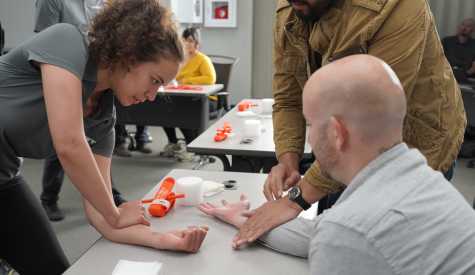
CPR, AED, and First Aid training gives staff the confidence to recognize an emergency situation, take the right first step, and use available resources. Regular drills can also reinforce these skills and improve response times. Additionally, practicing evacuation procedures and reviewing your emergency action plan regularly helps reinforce these critical skills.
Training also strengthens your overall safety culture. When employees feel prepared, they’re more likely to act quickly and support one another in high-stress situations.
Our National Training Solution (NTS) provides a turn-key approach to CPR, AED, and First Aid training. It makes it easy to scale training across locations while delivering consistent, high-quality training and reducing administrative burden.
Organizations can also train in-house instructors through our Instructor Development Course or connect with a local HSI Training Center to explore in-person and customized training options.
Whether you’re managing one location or many, the right training helps ensure your team is prepared to respond quickly and effectively when it matters most.
Related Articles
Why Time Is Critical During Sudden Cardiac Arrest
Sudden cardiac arrest strikes fast. Early CPR and AED use improves survival. Be ready to act—learn the chain of...
Emergency Care

Why Immediate Response Training Is Important for Everyone
Every second counts in a crisis. Immediate response training empowers ordinary people to act fast, save lives, and...
Emergency Care
Treating Different Types of Burns: Thermal vs. Chemical vs. Electrical
Understanding the different types of burns and knowing the appropriate treatment for each is crucial for effective...
Emergency Care
