Ways to Become an Empathetic Leader

We’ve all heard the soft skill, “works well with others,”, but what does that actually look like in practice? And where does empathy fit in?
In recent years, the leadership role has evolved beyond just focusing on strategy and return on investment. Today’s business leaders are navigating increasingly diverse and dynamic teams, where empathy is no longer optional; it’s a key skill. Harvard Business Review calls empathy a core, non-negotiable leadership skill, linking it to stronger collaboration, innovation, and employee engagement.
The Importance of Empathy
From mirror neurons to the supramarginal gyrus, our brains are wired for empathy. When we embrace this instinct, everyone benefits. Here’s why:
- Loyalty: Retaining talent is one of the main issues organizations face today. Many employees attribute this to insufficient support from senior leaders. One of the most effective ways leaders can build loyalty is by practicing empathy. When leaders empathize with their workforce, they build trust. Trust helps employees feel valued, and employees are loyal to companies that value them.
- Engagement: When people genuinely care about others, they reciprocate. The same applies to the workplace. When employees feel truly connected to their company, they’re more engaged, and their job performance improves.
- Cooperation: When leaders prioritize empathy, employees are more inclined to emulate that behavior. This fosters better teamwork and minimizes interpersonal conflict.
- Happiness: When people feel appreciated, they’re happier. Happier employees are more productive and less likely to disengage. Empathetic leadership leads directly to a more satisfied, productive workforce.
- Creativity: Together, all these benefits create a work environment where employees feel supported, and safe enough to take the risks that lead to true innovation. This is where creative leadership comes to life. Leaders who welcome new ideas, invite different viewpoints, and create space for experimentation build teams empowered to deliver their best work.
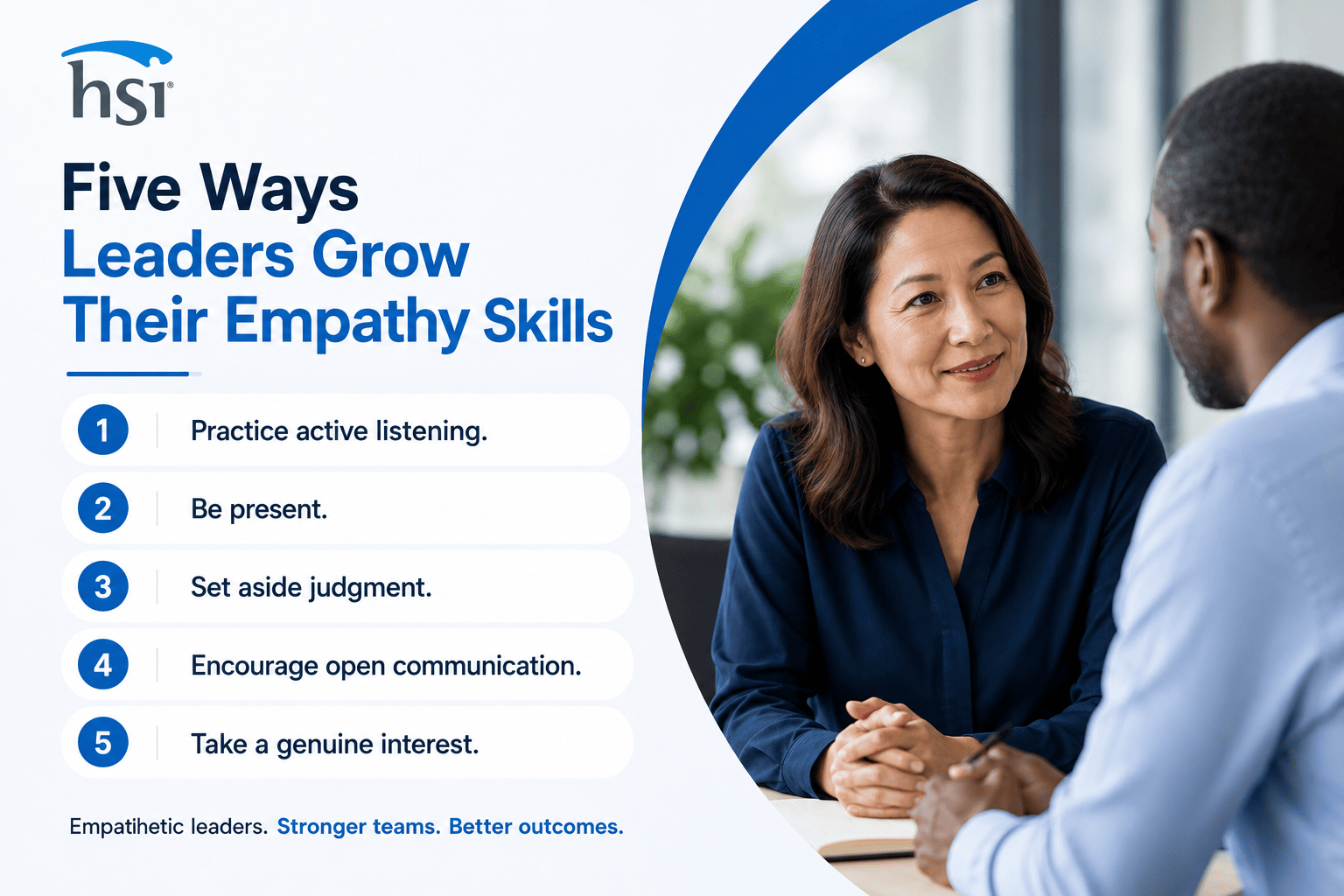
Five Ways Leaders Grow Their Empathy Skills
Empathy is a key skill for effective leadership. While nearly everyone can empathize, putting it into practice takes intentional effort. Thankfully, empathy is like a muscle: The more you exercise it, the stronger it gets. To be a more empathetic leader, try integrating these methods into your management style:
- Practice active listening. Active listening goes beyond simply hearing someone. It means paying close attention to their tone of voice, nonverbal communication, including facial expressions and body language, asking thoughtful questions, avoiding interruptions, and fully considering both what’s said and the nonverbal cues before responding.
- Be present. Leaders can’t be empathetic if they’re not paying attention. Avoid distractions and stay engaged in each discussion.
- Set aside judgment. True empathy requires open-mindedness. Check assumptions and focus on understanding others’ point of view. Instead, take a proactive approach by leading with compassion, curiosity, and genuine concern, working to understand others’ point of view before drawing conclusions.
- Encourage open communication. Once attentive, notice any team members who contribute less than others. Try to ask those employees for their ideas and perspectives. Just because they’re quiet doesn’t mean they don’t have great things to contribute. Create a safe space for teams to share their ideas openly. This helps foster psychological safety and a stronger sense of belonging.
- Take a genuine interest. Empathetic leaders authentically care for their team members: their experiences, emotions, and personal interests. Be curious, ask thoughtful questions, and find common ground with teams to foster empathy.
Too often, vulnerability and emotional openness, aspects of empathy, are viewed as weaknesses. But the opposite is true. Though it’s a soft skill, empathy is an impressive strength for both team members and leaders. Genuinely caring about others takes effort. Most spend their days focused on themselves since people can only actively experience their perceptions. But that doesn’t mean everyone can’t try to understand what others are going through, including the emotions of others.
Empathy Cultivates Innovation
Artificial intelligence, the computer, the smartphone, gene therapy, and the moon landing... none of humanity’s greatest inventions or feats happened alone. When it comes to bringing big ideas to life, we need each other. We need cooperation. And most of all, we need empathy. When we think about the purpose of innovation, we can shrink it down to a single concept: meeting needs, both collective goals and the individual’s needs. We’ve all heard the saying “necessity breeds invention,” but as organizations look towards the future in our complex and interconnected world, we must determine which necessities, and whose needs, are the focus.
Genuine empathy, for ourselves, loved ones, colleagues, and strangers, is how we get there. Empathy is more than understanding feelings; it’s key to a healthy society.
Empathy matters. Becoming more empathetic is one of the best things you can do for your organization and your people. Empathetic leaders show that your culture values more than just business success, it prioritizes people and their job satisfaction.
HSI Can Help
HSI offers a comprehensive online learning experience that supports diverse learning styles and workforce needs. Through a multi-modal approach for every learner, organizations can deliver engaging, effective training that drives real workplace impact. Our video-based microlearning captures attention and enhances understanding through concise, visual content, while our bite-sized, interactive lessons reinforce key concepts and support long-term retention. This combination is ideal for developing essential workplace skills like empathy, communication, and collaboration, helping employees build stronger connections, navigate challenges more effectively, and contribute to a healthier organizational culture.
This approach is one of the most important things for developing essential workplace skills like empathy, communication, and collaboration, helping employees build stronger connections, navigate challenges more effectively, and contribute to a healthier organizational culture. Together, these learning experiences help drive culture change and empower employees to build skills and apply them in the flow of work.
To learn more about HSI’s training solutions, request a consultation.
Related Articles
A Comprehensive Guide to Soft Skills Training
Soft skills training empowers employees at every level to grow and succeed professionally. For instance, effective...
Employee Training & Development

A Comprehensive Guide to Leadership Training
What a comprehensive leadership training program looks like and how it shapes and champions successful employees and...
Employee Training & Development

8 Ways Soft Skills Training Fosters Innovation
Soft Sills training fosters innovation by equipping employees with essential skills to innovate thus creating a culture...
Employee Training & Development
