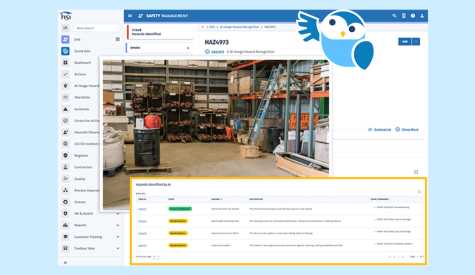
Context-Aware AI vs Search in Safety

Context-aware AI in safety connects your data, workflows, and compliance requirements to deliver answers that reflect real working conditions. It goes beyond search by linking incidents, inspections, and training into one clear picture. This helps teams find the right records faster and understand what actions to take next. The result is quicker decisions, stronger compliance, and fewer repeat incidents.
Why Do Search Tools Fail to Connect Safety Records and Risks?
Search tools are built to find documents. Safety work requires connecting them. A keyword search can pull every file that mentions “forklift,” “heat stress,” or “PPE.” That helps you locate information, but it doesn’t explain what’s actually happening across your operations.
The problem shows up as soon as the question gets more specific:
A supervisor may need to understand why near misses are increasing on one shift.
A safety director may want a quick view of similar incidents across multiple sites.
A compliance lead may need to confirm if a case was recorded on time and backed by the right details.
Search can’t answer those questions on its own.
It returns individual records, but it doesn’t show how they relate. The user still has to open files, compare details, and piece the story together manually.
Many AI tools improve the experience, but they often stop at summarizing what they can retrieve.
They can generate clean answers, but those answers may pull from limited records, miss key connections, or rely on general patterns instead of what’s actually happening inside your safety program. If the system doesn’t understand your data structure or workflows, it can’t reliably connect incidents, inspections, and corrective actions.
How Does Context-Aware AI Understand Your Safety Program and Workflows?
A context-aware AI safety system doesn’t just read records. It understands how your program is built and how work actually moves through it.
It recognizes how your data is organized, including modules, naming conventions, user roles, and workflow steps. It also understands how records connect so an inspection can link to a hazard, a hazard to a corrective action, and that action to training or follow-up.
That’s what makes it different from a search tool.
Instead of pulling isolated records, it follows the relationships between them. It sees how information flows across your system and uses that structure to deliver answers that reflect how your program actually operates.
That becomes clear when patterns start to emerge.
If a company logs multiple hand injuries, a basic tool will show each report. A context-aware system will connect the details and reveal that the incidents came from the same line, involved similar conditions, and followed a recent change in process or staffing.
This connected approach aligns with how safety programs are meant to work.
OSHA’s program evaluation and improvement guidance emphasizes reviewing incident reports, exposure data, hazard controls, and performance trends together. OSHA’s hazard identification guidance also points to incidents and near misses as signals of underlying hazards that require deeper analysis.
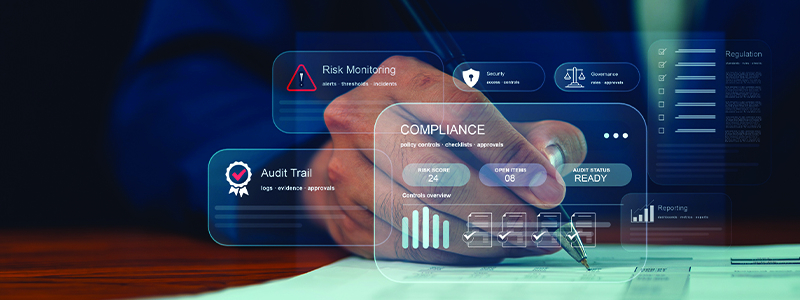
How Does Context-Aware AI Turn Safety Data Into Clear Actionable Summaries?
Safety teams don’t need more dashboards. They need clear answers they can act on.
Most tools still leave the heavy lifting to the user. Teams have to sort through reports, compare data, and figure out what changed, where risk is rising, and what needs attention.
The real questions are simple, but hard to answer quickly.
What changed this month?
Which sites show the same pattern?
What’s driving repeat incidents?
What should we fix first?
Context-aware AI closes that gap.
Because it understands how records connect, it can review incidents, inspections, corrective actions, and training together. Instead of showing raw data, it delivers a plain-language summary that reflects what’s actually happening across the program.
When summaries reflect the full picture, teams don’t have to interpret scattered data. They can move straight to action, reduce delays, and focus on preventing the next incident instead of reacting to the last one.
How Does HSI Sky™ Apply Context-Aware AI to Real Safety Workflows?
Most safety teams do not struggle with a lack of data. They struggle with making that data useful in the moment it matters.
HSI brings together safety training, EHS software, and compliance tools into one connected system. Sky builds on that foundation as an AI assistant that works inside your actual safety program. It doesn’t sit on top as a separate tool. It understands how your system is set up, how your data is structured, and how your workflows move from one step to the next.
With HSI and Sky, your team can:
Find the right records across incidents, inspections, and audits without digging through multiple systems
See patterns across locations, tasks, and time periods with clear summaries, not raw data
Connect hazards directly to corrective actions and track them through completion
Link incident trends to the right training so prevention becomes part of the workflow
Work within your existing processes, roles, and permissions, not around them
Sky is not a general-purpose AI tool. It is built for safety-critical environments where accuracy, timing, and traceability matter. It reflects how your organization actually operates, so the answers it gives are grounded in your data, your procedures, and your risks.
For EHS leaders, that means fewer delays and better decisions. Instead of chasing information, your team can focus on preventing the next incident.
See how HSI and Sky can help you turn everyday safety data into faster, more confident action.
FAQ
What is context-aware AI in a safety environment?
Context-aware AI in safety uses company-specific data, workflows, and regulatory requirements to deliver answers. It connects incidents, inspections, training, and policies so safety teams can make decisions based on real work conditions, not generic information.
How is context-aware AI different from a search tool in EHS software?
A search tool finds documents based on keywords, but it does not connect related records. Context-aware AI links data across modules, identifies patterns, and surfaces relevant insights so users do not have to piece information together manually.
How does AI use safety data to identify risks and trends?
Context-aware AI reviews incident reports, inspections, corrective actions, and training records together. It looks for patterns across locations, tasks, and time periods, then summarizes key risks so safety teams can focus on the areas that need attention.
Can context-aware AI help with OSHA recordkeeping and compliance?
Yes. Context-aware AI works within structured safety data, including OSHA recordkeeping requirements like timely case entry and proper documentation. It helps teams find records quickly, check for missing information, and support accurate reporting and audits.
How does context-aware AI improve safety training and prevention?
Context-aware AI connects incident trends to training needs. When it detects repeated hazards or gaps in performance, it can recommend targeted training and corrective actions. This helps organizations address root causes and reduce the chance of repeat incidents.
Related Articles
Trusted AI in Safety Software Explained
What Is Trusted AI in EHS software?
Workplace Safety
AI for Workplace Safety Starts Here: Meet Sky™
Meet Sky™! What Happens When You Ask Sky a Safety Question? | HSI
Emergency Care
How AI Detects Safety Hazards from Job Site Photos
How AI Image Hazard Recognition Works in EHS
Industrial Skills