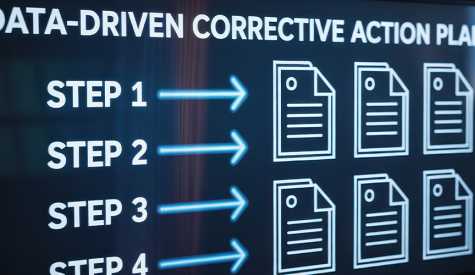
Five Ways to Turn AI Safety Data into Action
Key Takeaway
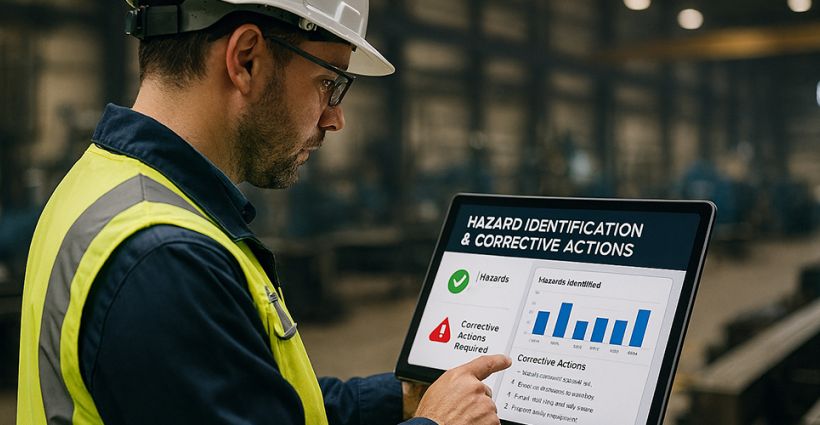
Hazards, corrective actions, and training should not live in separate systems. AI helps bring them together so each risk leads to clear action and the right training. This keeps safety tied to real work, not just records. It also helps teams prevent repeat incidents, not just respond to them.
What Is A Closed-Loop Safety System And Why Does It Matter?
A closed-loop safety system connects hazard identification, corrective actions, and training into one continuous cycle. Each step builds on the last, so when something goes wrong, the organization learns from it and reduces the chance it happens again.
This isn’t just a best practice, it’s how OSHA expects safety programs to function. In its Recommended Practices for Safety and Health Programs, OSHA calls on employers to:
Train workers to identify and control hazards
Investigate incidents and near misses
Use findings to guide corrective actions
OSHA also explains in its education and training guidance that training should:
Help workers recognize, report, and control hazards
Stay embedded in daily operations, not separate from the work
This makes the intent clear. Training should respond to real risks as they happen, not follow a fixed schedule.
Many organizations struggle to make this work in practice. They track incidents in one system, manage corrective actions in another, and deliver training somewhere else, so the data never fully connects.
When those pieces stay disconnected, the same risks keep showing up. A closed-loop system fixes that by turning every hazard into both action and learning, so safety improves over time instead of staying stuck.
When Should Hazards Trigger Safety Training?
A hazard should trigger training when it exposes something new, a new risk, a change in conditions, or a gap in what workers know. At that point, training isn’t optional, it becomes part of how you control the risk.
OSHA reinforces this through several standards that require retraining when conditions change or problems appear:
Hazard Communication (29 CFR 1910.1200): Train workers at initial assignment and when new chemical hazards are introduced
PPE (29 CFR 1910.132): Retrain when workplace changes or knowledge gaps make prior training ineffective
Lockout/Tagout (29 CFR 1910.147): Retrain when inspections reveal deviations or weak understanding
Powered Industrial Trucks (29 CFR 1910.178): Provide refresher training after accidents, near misses, unsafe operation, or changes in the work environment
Across these rules, the pattern is clear. When risk changes, training needs to change with it. This matters because timing drives effectiveness. When training follows real events, workers can apply what they learn right away, which makes it far more likely to stick and prevent the next incident.

How Does AI Connect Hazards, Corrective Actions, And Training?
AI helps safety teams move from raw data to clear action much faster. It reviews large volumes of incident reports, inspections, audits, and observations, then highlights patterns that would be easy to miss during manual review.
Most organizations already collect this data, but it often sits in separate systems and never leads to timely action. AI helps connect those inputs by linking repeated hazards, common failure points, and gaps in response to the right corrective actions and training.
Used well, AI can:
Flag repeat hazards across sites or teams
Identify where corrective actions fall short
Recommend when training should be updated
Surface relevant training based on real events
This makes the process more proactive. Instead of reacting after another incident, teams can act on early signals and reinforce the right behaviors before risk escalates.
What Does A Real-World Hazard-To-Training Workflow Look Like?
A real-world workflow starts with a single event and ends with a change in how work gets done. The goal isn’t to close a report, it’s to reduce the chance that the same risk shows up again.
Picture a distribution center where a worker reports a forklift near miss at a blind intersection. The report enters the EHS system, and the investigation reveals similar near misses at other sites, pointing to a broader pattern.
From there, action and training move together. A supervisor assigns corrective actions to improve traffic flow, while the system recommends refresher training for forklift operators and nearby pedestrians based on the risks identified.
This follows OSHA expectations. Under the Powered Industrial Trucks standard (29 CFR 1910.178), accidents and near misses can trigger refresher training, while OSHA’s program evaluation guidance encourages tracking both corrective action completion and training as leading indicators.
The difference is in how the response is connected. Training isn’t assigned because it’s due, it’s assigned because the work revealed a real risk.
When that loop works, even a near miss becomes valuable. It drives action, reinforces the right behaviors, and lowers the chance of the next incident.
How Does HSI And Sky Turn Safety Data Into Action And Training?
Most organizations already collect safety data. The real challenge is turning that data into timely action and the right training before another incident occurs.
HSI solves this by connecting EHS management and learning in one system, then adding intelligence through Sky, its AI-powered safety assistant. Sky helps teams move from hazard identification to corrective action to training without delays or guesswork.
With HSI and Sky, you can:
Use AI to identify patterns and flag repeat risks across sites
Assign and track corrective actions through completion
Trigger training recommendations based on actual safety events
Deliver targeted training tied directly to workplace conditions
Sky analyzes your safety data and surfaces what matters most. It connects incidents to actions and actions to training, so nothing falls through the cracks.
This keeps safety aligned with real work. It also helps your team respond faster and prevent repeat issues before they escalate.
Ready to turn your safety data into action? See how HSI and Sky can help you build a more proactive, prevention-driven safety program.
FAQ
What is a closed-loop safety system in the workplace?
A closed-loop safety system connects hazard identification, corrective actions, and training into one continuous process. Each step builds on the last so teams can learn from incidents and reduce repeat risks. This approach keeps safety efforts active instead of reactive.
When should safety training be updated after a hazard or incident?
Training should be updated when a hazard reveals new risks, changes in conditions, or gaps in worker knowledge. OSHA standards often require retraining after incidents, near misses, or workplace changes. Updating training at the right time helps prevent the same issue from happening again.
How does AI improve hazard identification and response?
AI reviews safety data across incidents, inspections, and observations to find patterns faster than manual review. It can flag repeat hazards and suggest next steps, including corrective actions and training. This helps teams respond earlier and focus on the risks that matter most.
Why is it important to connect safety data with training programs?
When safety data and training stay separate, lessons from incidents do not reach workers. Connecting them ensures that real-world risks lead to relevant training. This makes training more practical and improves how workers respond on the job.
How can organizations prevent repeat safety incidents?
Organizations prevent repeat incidents by identifying root causes, completing corrective actions, and reinforcing the right behaviors through training. A connected system ensures each incident leads to both action and learning. Over time, this reduces recurring hazards and improves overall safety performance.
Related Articles
AI for Workplace Safety Starts Here: Meet Sky™
Meet Sky™! What Happens When You Ask Sky a Safety Question? | HSI
Emergency Care
Enhance Safety with AI: Predict, Prevent, Protect
Reduce Workplace Incidents with AI | HSI
EHS Environmental, Health & Safety

Close the Loop: Smarter CAPA Workflows for Safer Workplaces
Fix Broken CAPA Processes with One System
Workplace Safety