How AI Turns Workplace Hazards Into Immediate Corrective Training
AI can turn hazard detection into immediate corrective training. When a worker reports a hazard, an inspection uncovers a risk, or an incident highlights unsafe behavior, the system can assign the right training right away. That quick connection helps employers respond faster and reinforce the skills workers need to avoid repeat incidents. The result is a continuous loop where hazards lead directly to learning, corrective action, and safer work practices.
How can AI connect hazard identification to real-time training?
Connecting hazard identification to real-time training assignments means using AI to help turn a detected risk into the right learning response without delay. Instead of waiting for someone to read a report, decide what training fits, and assign it by hand, the system can recognize the hazard, interpret what it means, and route workers to training that matches the risk.
That AI layer matters because workplace hazards rarely show up in one neat format. A risk might appear in a near-miss report, an inspection note, a photo from the floor, or a pattern buried across multiple incident records. AI helps pull those signals together, spot what deserves attention, and connect the event to the most relevant corrective training.
This makes hazard data more useful. A blocked exit, missing Personal Protective Equipment (PPE), or repeated forklift issues doesn’t just sit in a record waiting for follow-up. The system can treat that event as a trigger for action and help move the right people into the right training while the issue is still fresh.
When hazards connect directly to corrective training, safety teams can move from detection to action much faster. The next step is understanding how that connection actually works inside a system.
How does the AI-to-LMS workflow work in practice?
Turning hazard detection into corrective training requires a structured workflow. AI helps identify risk signals, but the real value comes from connecting those signals to the right training and confirming that workers understand how to prevent the problem from happening again.
A well-designed system follows five core steps that move the process from detection to prevention.
1. Capturing the hazard signal
The workflow begins when the system receives information about a potential risk. These signals often come from inspections, incident reports, near misses, safety observations, uploaded photos, chemical records, audits, or digital checklists.
Some signals come directly from workers and supervisors. Others come from data analysis tools that detect patterns across reports, images, and historical records.
Examples of automated detection:
Computer vision tools that flag missing personal protective equipment under OSHA standard 29 CFR 1910.132
Trend analysis that identifies repeated injury types across shifts or locations
Text analysis that highlights similar root causes across multiple incident investigations
These signals help safety teams see risk earlier and respond before the issue leads to a more serious event.
2. Classifying the hazard and its context
Once the system captures a signal, AI helps organize the event so the risk can be evaluated more clearly. The platform tags the report with details like hazard type, location, job role, equipment involved, task, and severity.
That context helps determine what kind of training actually fits the situation. A fall risk on an elevated platform calls for very different instructions than a chemical exposure in a maintenance area.
3. Determining whether training is required
After the system classifies the hazard, it checks whether the event should trigger additional training. That decision relies on company rules, regulatory requirements, and the worker’s training history.
In some situations, OSHA standards already establish retraining triggers. For example:
29 CFR 1910.178 Powered Industrial Trucks requires refresher training when unsafe operation, accidents, or workplace condition changes occur.
29 CFR 1910.1200 Hazard Communication requires training when workers are exposed to new chemical hazards.
When the system recognizes one of these conditions, it can flag the event and initiate the next step automatically.
4. Assigning the appropriate learning path
Once training becomes necessary, the AI-powered learning management system assigns the course or corrective learning path that best fits the situation. The assignment takes into account the worker’s role, the type of hazard involved, and the task being performed.
Because the system connects hazard data with training records, it can route workers to instruction that directly relates to the risk they encountered. Instead of sending broad reminders or generic courses, the training focuses on the behavior or condition that needs attention.
5. Verifying that the corrective action worked
The final step checks whether the training actually made a difference. The platform records course completion, tracks corrective actions, and monitors follow-up observations to see if the issue improves.
This step closes the loop between hazard detection and training. Once that loop is in place, the next question becomes what kinds of events should trigger that training in the first place.

What does a good real-time training trigger look like?
A good training trigger starts with a real safety event and connects it to the right learning response. The trigger should be clear and traceable, tied to something that actually increases risk on the job.
If triggers are too broad, workers can end up with training that doesn’t match the situation. That kind of mismatch wastes time and makes it harder for employees to see the value in the training.
Well-designed triggers take several factors into account at the same time. The system looks at the type of hazard, the task being performed, the worker’s role, the location, and the person’s training history before deciding whether additional instruction is needed.
Example: Lockout procedure missed during equipment repair
During a maintenance review, a supervisor documents that a technician began servicing a conveyor before completing the full lockout procedure. The event is logged as a safety observation during the shift.
The system reviews the record, identifies the task as equipment servicing, and checks the worker’s training history. Because the issue involves control of hazardous energy, the platform can assign refresher training tied to OSHA’s Lockout/Tagout standard (29 CFR 1910.147) and schedule a follow-up observation to confirm the procedure is followed correctly.
Example: Repeated ladder misuse during facility inspections
Over several weeks, inspection reports from different supervisors note workers standing on the top step of portable ladders while accessing storage racks. Each report appears minor on its own, but together they reveal a pattern of unsafe ladder use.
AI can flag the trend and connect it to targeted ladder safety training aligned with OSHA walking-working surfaces requirements (29 CFR 1910 Subpart D). The system assigns the training to the affected work group and records completion alongside the inspection history.
When these triggers work correctly, hazards no longer sit idle in a report. They move directly into corrective action and training, which is exactly where a connected platform can make the biggest difference. But translating hazard signals into training requires technology that connects safety data and workforce learning. This is where a unified EHS and training platform becomes critical.
How HSI Helps Turn Hazard Detection Into Real-Time Training
HSI provides safety leaders with a connected platform for hazard reporting, incident management, and workforce training. Instead of tracking hazards in one system and assigning training in another, HSI brings these processes together so risks lead directly to corrective action and learning.
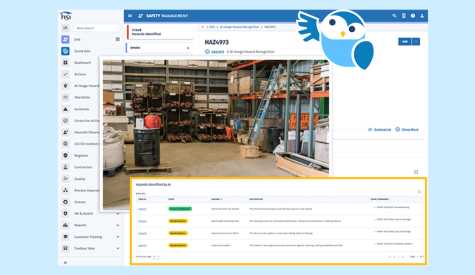
At the center of this workflow is HSI Sky™, the AI-powered safety assistant built into the platform. Sky analyzes safety data, identifies patterns in hazards and incidents, and helps connect those signals to the training workers need.
With HSI and Sky working together, safety teams can:
Capture hazards from inspections, observations, incidents, and near misses in one system
Use AI to identify patterns and emerging risks across locations and teams
Automatically recommend or assign targeted training based on the hazard, task, and worker role
Track training completion alongside corrective actions and investigation records
Maintain clear documentation showing how hazards led to action and prevention
Because Sky works directly inside the safety workflow, teams can move from hazard detection to corrective training much faster. Instead of reviewing reports manually and deciding what training might help, the system can surface the risk and recommend the right response.
If your organization wants to move faster from hazard detection to prevention, HSI can help.
Request a demo to see how HSI and Sky connect hazard identification, corrective action, and real-time training assignments in one platform.
FAQ
What is hazard-triggered safety training?
Hazard-triggered safety training occurs when a reported hazard, near miss, inspection finding, or incident automatically assigns targeted training to the affected workers. The system links the risk event to the correct course or learning path in the learning management system. This approach helps reinforce the specific skills needed to prevent similar incidents.
How can AI improve hazard identification in the workplace?
AI can analyze safety reports, inspection data, incident records, and uploaded images to detect patterns or potential hazards faster than manual review alone. It can flag recurring risks, identify unsafe behaviors, and highlight emerging trends. Safety teams can then respond quickly with corrective actions and targeted training.
Does OSHA require retraining after workplace hazards are identified?
Many OSHA standards require retraining when hazards change, unsafe behavior occurs, or workers show gaps in knowledge. Examples include powered industrial truck rules under 29 CFR 1910.178, PPE requirements under 29 CFR 1910.132, and Hazard Communication under 29 CFR 1910.1200. These rules show that new risks or unsafe actions should trigger additional training.
What types of safety events should trigger corrective training?
Corrective training often follows events that signal increased risk or knowledge gaps. These may include near misses, incident investigations, unsafe equipment operation, inspection findings, or the introduction of new chemical hazards. Linking these events to training helps address the root cause and prevent repeat incidents.
Why is connecting hazard data to a learning management system important?
Connecting hazard data to a learning management system allows safety teams to respond quickly and consistently. The system can assign the right training based on the hazard type, worker role, and workplace conditions. This connection creates a documented record that shows how hazards led to corrective action and worker training.
Related Articles
How AI Detects Safety Hazards from Job Site Photos
How AI Image Hazard Recognition Works in EHS
Industrial Skills
AI in Safety: Spot Hidden Hazards Before They Become Accidents
AI in Hazard Detection: Preventing Accidents Before They Happen
EHS Environmental, Health & Safety

Trusted AI in Safety Software Explained
What Is Trusted AI in EHS software?
Workplace Safety