CPR Awareness: What Every Bystander Needs to Know
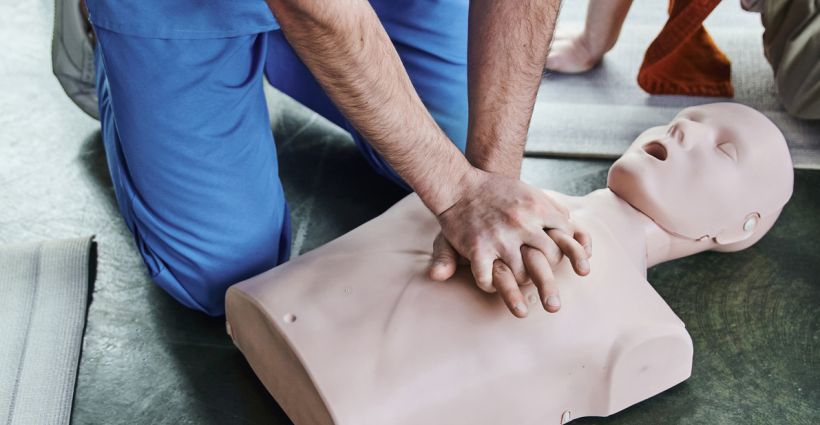
During National CPR and AED Awareness Week (June 1–7), it’s worth asking a simple question: If someone collapsed in front of you at the grocery store, a high school football game, or a family gathering, would you know what to do?
In the United States, hundreds of thousands of people experience out-of-hospital cardiac arrest each year. Research consistently shows that early CPR and AED use can significantly improve survival rates, meaning everyday bystanders can play a critical role in improving a person’s chance of survival before emergency services arrive.
Yet many people hesitate to act. Not because they don’t care, but because uncertainty, fear, and lack of confidence often take over in stressful moments.
Fortunately, most of the barriers that prevent action are far less intimidating than people imagine.
“What if I do CPR wrong?”
This is one of the most common fears people have during a medical emergency. What if they do something wrong and make the situation worse? This concern can feel even more overwhelming if it’s your first time witnessing someone collapse.
When a person experiences sudden cardiac arrest, the heart suddenly stops pumping blood effectively. Without blood flow, the brain and other vital organs begin suffering damage from lack of oxygen within minutes.
In these critical moments, doing something is better than doing nothing.
For trained bystanders, conventional CPR combines chest compressions with rescue breaths to help move oxygenated blood through the body. This can help buy time until professional help arrives and takes over.
However, if you’re not CPR certified or unwilling to provide rescue breaths, compression-only CPR is still encouraged. Pressing hard and fast in the center of the chest can help keep blood circulating while waiting for emergency responders.
Remember this: emergency response is rarely perfect — even for experienced medical professionals. What matters most is being willing to step in and do what you can until help arrives.
“Surely someone else will help, right?”
Sometimes hesitation has less to do with confidence and more to do with human behavior.
The bystander effect is a common phenomenon during emergencies where people are less likely to step in because they assume someone else will act first. When several people are present, responsibility can feel shared, making it easy to assume someone else has already called 911, knows CPR, or is better equipped to help. In public spaces, that hesitation can happen quickly even when everyone genuinely wants to help.
Unfortunately, waiting can delay care, and those lost moments matter when someone is in cardiac arrest.
One simple way to overcome hesitation is to take charge of the moment by giving directions to other bystanders:
- “You call 911.”
- “You get the AED.”
- “You stay with them.”
Clear instructions increase the willingness of bystanders to act and remind people they do not have to be experts to help.
“How do I know the AED won’t hurt them?”
Many people assume an automated external defibrillator (AED) is difficult to use or only meant for healthcare providers. In reality, AEDs are designed to guide users step by step. Voice prompts and visual aids explain what to do, where to place pads, and when to stand clear.
Most importantly, an AED analyzes the heart’s rhythm and only gives a shock if one is needed. In other words, the device is designed to avoid shocking someone unnecessarily.
You can find AEDs in schools, airports, workplaces, gyms, and other locations that function as part of an organized emergency response system.
“What if I get sued for helping?”
Fear of legal liability prevents some people from stepping in during emergency situations.
Fortunately, good Samaritan laws exist to protect people who step forward to offer help during emergencies. While laws vary by state, these protections are intended for lay rescuers acting in good faith.
In simple terms, people who reasonably try to help are often protected from lawsuits. That protection doesn’t extend to intentional harm or gross negligence. But if you’re acting reasonably, following your training, or making an honest effort to help during an emergency, the law is designed to encourage action, not punish it.
“What if I can’t stop thinking about it afterward?”
Responding to a crisis can leave an emotional impact, and it’s completely normal to replay the experience afterward.
Even experienced healthcare professionals and first responders sometimes struggle emotionally after traumatic calls or death situations.
You may find yourself replaying moments in your head, wondering if you acted quickly enough, or asking whether you could have done more. Those feelings are a normal response to a stressful, high-pressure event.
It’s also important to remember that many factors influence outcomes, including timing, a person’s health history, and access to advanced emergency care. The outcome is not yours alone to carry.
Talking with trusted people, counselors, or workplace support systems can help after difficult experiences. For those looking for additional support, the Cardiac Arrest Survivor Alliance (CASA), a program of the Sudden Cardiac Arrest Foundation, offers resources and an online community for survivors, families, lay responders, and others affected by cardiac arrest events.
Taking care of your own personal safety, including your emotional wellbeing, matters too.
CPR, AED, and First Aid training builds confidence
The truth is that most bystanders don’t hesitate because they don’t care — they hesitate because they’re unsure what to do. Training helps replace uncertainty with confidence.
Whether it’s learning CPR, understanding how an AED works, or building everyday first aid knowledge, these skills allow people to feel more prepared to step in when others need help.
Contact your local HSI Training Center to get CPR, AED, and First Aid certified, or explore flexible training options for your workplace or individual needs.
Related Articles
The Importance of CPR in Schools
Let’s explore how CPR in schools is impacting bystander CPR rates and how this required training translates into our...
Emergency Care

The Beginner's Guide to CPR and AED
In honor of National CPR and AED Awareness Week (June 1-7), let’s break down the basic steps of CPR and how to use an...
Emergency Care

How to Become a CPR Instructor: For New and Experienced Instructors
Whether you are brand new to the emergency care training world or have years of teaching experience, here are some...
Emergency Care
