GHS Rev. 7: How to Keep Chemical Labels Compliant
When chemical labeling falls behind, risk escalates quickly. A single missing pictogram or outdated hazard phrase can be the difference between a safe shift and a serious incident. In 2024, OSHA revised the Hazard Communication Standard (HazCom) to align with the 7th edition of the UN’s Globally Harmonized System (GHS), introducing new classifications and stricter labeling requirements, especially for small containers.
These changes go beyond paperwork. They impact how companies manage safety, maintain compliance, and protect both their people and their bottom line. If you're involved in labeling, SDS updates, or chemical risk management, this article will help you understand what’s changed and what it takes to keep up.
Small Containers, Big Challenge
Let’s start with the basics. GHS is the international system for classifying and labeling chemicals. It ensures workers, distributors, and downstream users all understand chemical hazards the same way, whether they’re in Ohio or Osaka. One of the most talked-about changes is how GHS Rev. 7 handles small packaging. These tiny containers may seem simple, but under the new rules, they carry some big responsibilities.
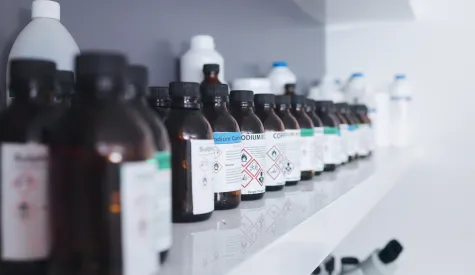
Small containers are everywhere, from lab samples to consumer-facing products like adhesives, cleaners, and cosmetics. These packages often hold highly hazardous substances, but their size makes traditional labeling a problem. Before GHS Rev. 7, companies had to choose between cluttered labels that were hard to read or workaround solutions that risked missing key hazard information.
Now, OSHA’s adoption of the GHS small container labeling guidance offers some flexibility. But that flexibility comes with strict conditions. For containers under 100 mL, businesses can skip some elements like precautionary statements or detailed handling instructions. But labels still need to include:
The product identifier
A clear hazard pictogram
The signal word
Manufacturer’s name and contact number
For containers 3 mL or smaller, only the product identifier is required, but only if adding more information makes the container unusable and if all other required information is clearly visible on the outer packaging.
The challenge isn’t just what to include, it’s how to apply it. Labels must still be durable, resistant to chemicals, and readable throughout the product’s use. Companies need to assess their label materials, printing processes, and distribution workflows to avoid compliance gaps.
Small container labeling is a direct line to worker safety and product integrity. That’s why it’s important to step back and look at the broader impact labeling decisions can have.
Why It Matters Beyond the Label
Labels aren’t just for regulators, they’re for people. A worker in a warehouse, a nurse in a clinic, or a technician on a production line may all depend on that label to make a split-second decision. If the hazard isn’t clear, the response might be wrong. And in chemical handling, wrong can be life-threatening.
Let’s say an employee is working with a solvent stored in a small dropper bottle. If the label is missing the flammable symbol due to size limitations, or worse, isn’t legible, they might leave it near a heat source, unaware of the risk. That’s not just a label failure, it’s a system failure.
In addition to protecting workers, correct labeling protects your business:
OSHA inspections now often include label reviews as part of routine audits.
Third-party logistics providers may reject shipments with incomplete or unclear labels, causing delays.
A mislabeled or unlabeled product could trigger a recall or lead to downstream liability claims.
Understanding the risks is one part of the equation. Now let’s talk about how to stay ahead of them, without grinding operations to a halt.
Staying Compliant Without Slowing Down
Keeping up with GHS Rev. 7 doesn’t have to slow down your business. The trick is building a system that integrates compliance into everyday operations, so it runs in the background while your team focuses on getting the job done.
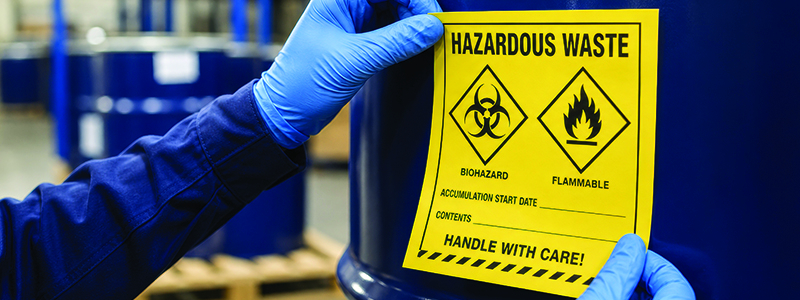
Start with a label audit. Don’t wait for a shipment to get flagged, review your current labels now. Cross-check them with your SDS to ensure consistency, especially for hazards that now require updated statements, like respiratory corrosives.
SDS accuracy is key.
GHS Rev. 7 brought changes to Section 2 (hazards), Section 3 (composition), and Section 9 (physical and chemical properties). If your SDS are outdated, your labels will be too. Set up a process for reviewing SDS when formulas change, suppliers update classifications, or regulatory thresholds shift.
Bring the right people together. EHS teams know the regulations. Operations teams know the workflows. Product managers know the packaging. When these groups collaborate, compliance becomes part of the process, not a roadblock.
Don’t just set it and forget it. Build a compliance calendar. Whether it’s quarterly reviews or triggers based on chemical changes, routine checks make it easier to fix issues before they grow into problems. But it’s not about reacting to updates, it’s about staying ready for them. Of course, staying ahead is easier with the right tools.
Take Control of Chemical Labeling with HSI
Keeping up with GHS Rev. 7 doesn’t have to be a burden. With the right partner, it becomes a clear advantage. That’s where HSI steps in. Our Chemical Management Solution is designed to take the guesswork out of compliance. It helps your team:
Track and update labels in real time, across your entire inventory
Sync your SDS with the latest GHS classifications
Handle small container labeling with precision and confidence
No workarounds. No gaps. Just tools that keep your labeling accurate and your operations moving. And then there’s HSI Intelligence, our AI-powered engine inside the HSI Platform. It’s not just a database. It’s an assistant that works behind the scenes to:
Analyze your chemical data and hazard trends
Recommend corrective training based on real incidents
Spot potential hazards in uploaded images, before someone gets hurt
This isn’t a separate add-on. HSI Intelligence is already included in our EHS and LMS, and it’s most powerful when those systems work together. You’ll be able to connect training, labeling, and incident response in one smart loop.
Our AI is already helping companies reduce manual work, align teams on safety protocols, and close compliance gaps. And we’re just getting started, future features will make it even more visual, proactive, and customizable.
GHS Rev. 7 raises the bar. Let’s meet it with systems built for what’s next. Talk to us today and see how HSI can help your team stay compliant, stay fast, and stay ahead.
Related Articles
5 Hidden GHS Rev. 7 Challenges Most Safety Leaders Overlook
Hidden Challenges of GHS Rev. 7 Compliance
Workplace Safety
Beyond Compliance: How GHS Rev. 7 Helps You Build a Safer Workplace
How GHS Rev. 7 Improves Hazard Communication
Chemical Compliance

6 Smart Ways to Tackle Small Container Labeling Under GHS Rev. 7
GHS Rev. 7 Small Container Labeling Rules Explained
Workplace Safety