How to Safely Work in the Heat

Working in hot weather can prove deadly. The actual number of heat-related fatalities and illnesses in the workplace is significantly underestimated, admits the Occupational Safety and Health Administration (OSHA). According to the Bureau of Labor Statistics, an average of 40-60 workers die from environmental heat exposure in the U.S. each year. These deaths are preventable with enforced OSHA regulations and proper safety training.
OSHA to the Rescue
OSHA recently updated its National Emphasis Program on indoor and outdoor heat exposure, pointing to a continued, more targeted focus on preventing heat-related illnesses in the workplace. The revised program expands inspections in high-risk industries and increases enforcement during periods of elevated heat.
For employers, this means greater scrutiny of heat illness prevention practices, including:
- Work practices: scheduling, rests, access to water, and shade
- Engineering controls and PPE
- Training for indoor and outdoor heat hazards, prevention, and treatment
- Emergency response procedures
As OSHA continues to develop federal regulations for heat injury and illness prevention, many states already have heat regulations in place, creating an additional layer of requirements for employers.
Understanding Heat Hazards
Whether working outdoors in the heat or indoors in environments with insufficient insulation, ventilation, or cooling, such as factories and warehouses, elevated temperatures come with the job. What feels manageable early in the day can quickly become dangerous as conditions intensify.
Heat stress occurs when the body overheats. Workers get tired more quickly and lose focus. Even routine tasks can become risky. The body is struggling to cool itself during hot or physically demanding work. If heat stress is dismissed, it can lead to heat exhaustion or heat stroke, both of which can be life-threatening.
The good news is that with heat awareness, hydration, and the right work practices and training, heat-related illnesses are preventable.
Heat exposure isn’t just about outside or inside air temperature. Several factors work together to increase risk and place additional strain on the body.
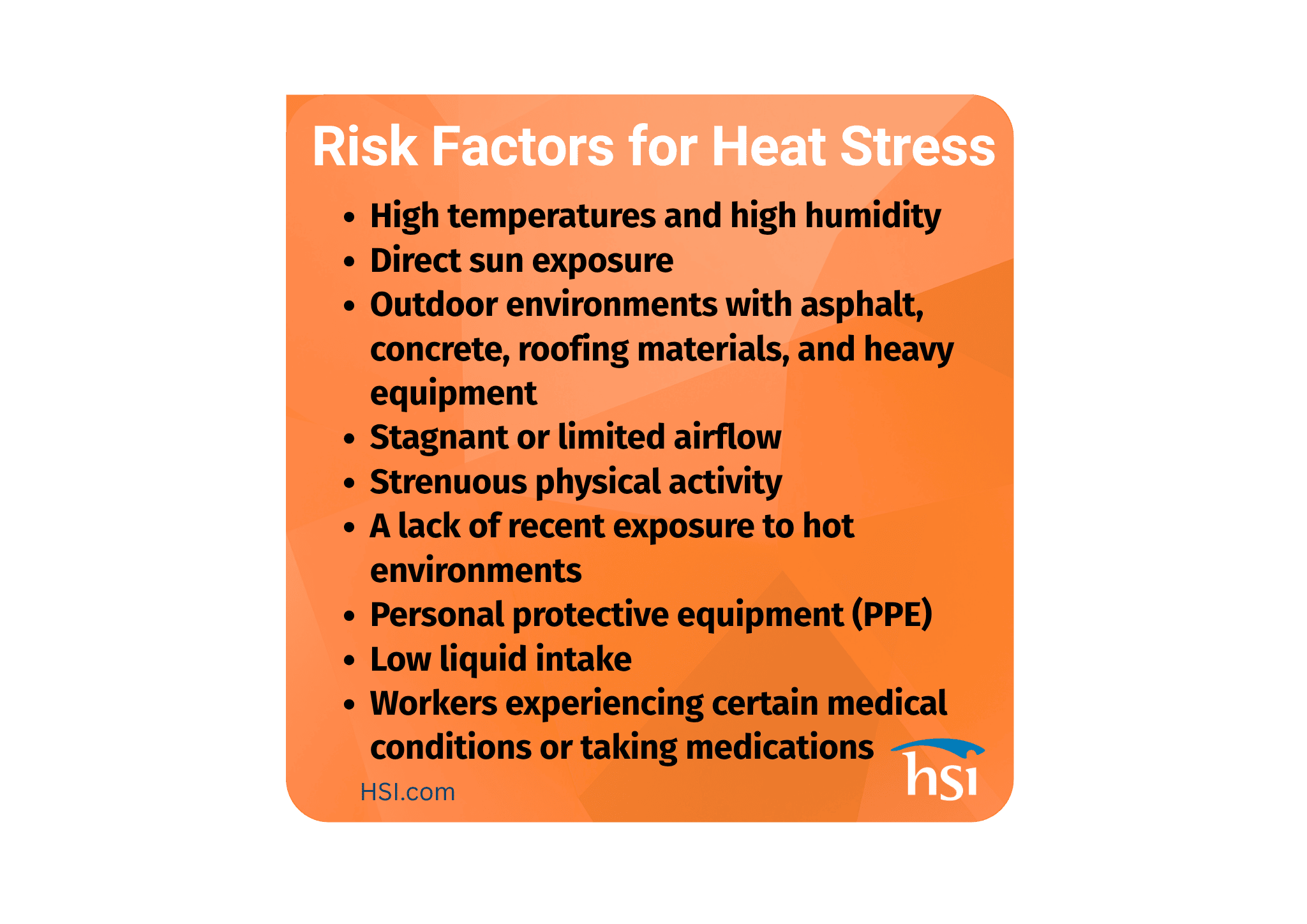
The risk factors for heat stress include:
- High temperatures and high humidity limit the body’s ability to cool through sweating, increasing fatigue, slowing reactions, and reducing focus.
- Direct sun exposure raises internal body temperature, making it harder to cool down.
- Outdoor environments with asphalt, concrete, roofing materials, and heavy equipment absorb and reflect heat, increasing the body’s heat load.
- Stagnant or limited airflow can cause temperatures to rise rapidly, leading to overheating.
- Strenuous physical activity generates internal body heat, which compounds heat exposure.
- A lack of recent exposure to hot environments prevents the body from adapting to extreme heat events.
- Personal protective equipment (PPE) such as high-visibility gear, long sleeves, gloves, and hard hats, may trap heat and reduce airflow, but must still be worn for safety.
- Low liquid intake causes dehydration.
- Workers experiencing certain medical conditions or taking medications may be more susceptible to heat.
These factors are able to sneak up on workers, causing fatigue, slower reaction times, and a higher likelihood of mistakes.
Recognizing and Responding to the Symptoms of Heat Illness
Overheating can cause dizziness, fainting, heat rash, heat cramps, heat exhaustion, heat stroke, and, in extreme cases, death. Heat-related illnesses aren’t always obvious. The body gives warning signs, but they can easily be ignored during strenuous work.
Early signs often begin with heat cramps, characterized by muscle pain, spasms, or tightening in the legs, arms, or abdomen. These signals indicate an imbalance in fluid and electrolyte levels. Taking a break and replenishing fluids with water, sports drinks, or juice can help restore that balance before symptoms worsen.
As exposure continues, heat exhaustion can develop. Symptoms include heavy sweating, dizziness, nausea, headache, weakness, and cool or clammy skin. At this stage, coordination worsens, and staying focused becomes more difficult. Moving to a cool area, rehydrating, loosening or removing unnecessary PPE and outer clothing, and cooling the body temperature can help prevent a more serious medical emergency.
Heat stroke requires immediate medical attention. The body’s core temperature rises above approximately 104°F, causing vital organs to begin shutting down. Signs of heat-related illnesses may include disorientation, loss of coordination, hot or dry skin, or collapse. Call 911 immediately. Quickly move to a shaded area or a room with air conditioning and cool the body with water or a cold compress.
One of the biggest risks is that workers may not recognize their own symptoms. Fatigue and confusion can make it harder to realize something is wrong. That’s why it’s critical to watch out for coworkers. If someone appears disoriented, unsteady, unusually quiet, or unable to perform tasks safely, heat illness may be developing.
Preventing Heat-Related Illness
As temperatures rise, so does the risk of heat stress for both indoor and outdoor workers. Hot weather, physical exertion, PPE, and limited airflow can all increase exposure. The safest way to address heat illness is to prevent it before symptoms develop.
- Hydrate. Drink cool water and electrolyte beverages before, during, and after work. Small, frequent drinks are more effective than waiting until you feel thirsty because by then, dehydration has already started.
- Take frequent breaks. Taking time in shaded or cooled areas allows the body to recover, helping keep focus, coordination, and safe performance.
- Acclimate. New workers or those not used to hot conditions need time to adjust. Gradually increasing exposure time allows the body time to adapt.
- Monitor the heat index. Changes in weather may require adjusted schedules, additional breaks, or even work stoppage.
- Flex work schedules. Whenever possible, plan physically demanding tasks for cooler times of the day, such as early morning or late afternoon.
- Slow the pace, rotate tasks, and add additional workers. This can help reduce the strain, especially during excessive heat and the hottest parts of the day.
- Wear protective clothing and PPE. Lightweight, breathable fabrics help release heat while still providing protection. Sun protection measures such as wearing a wide-brimmed hat, sunglasses, and sunscreen are also important.
- Use a buddy system. Coworkers can look out for signs of heat stress in others.
- Take heat safety training. Learn the signs and symptoms of heat-related illness and how to respond.
- Record unsafe conditions. Follow workplace procedures and report key details including heat index, duration of exposure, type of work being performed, PPE worn, and access to shade and water. Even when no injury occurs, reporting unsafe conditions such as extreme heat events, limited shade, or inadequate water access helps identify risks and improve safety practices.
- Download HSI’s Heat Safety Checklist.
HSI Can Help
Effective heat safety begins with informed workers. Providing employees with proper training helps them recognize heat risks early, respond appropriately, and make safer decisions during hot weather.
Heat risks call for more than compliance. HSI provides scalable tools that help safety leaders take an active approach to heat safety and possible risks.
The HSI platform helps organizations manage heat safety by combining training, safety management, and AI-driven insights in a single solution. Safety leaders can deliver timely and relevant training, track heat-related incidents, log environmental conditions, and identify emerging risks, right from a centralized system.
With HSI Intelligence, teams can discover patterns in heat-related incidents, predict where risks may be increasing, and receive recommendations for corrective actions before small concerns become serious events.
Because HSI Intelligence integrates with both the EHS System and the LMS, safety and training work together in real time. Heat-related issues don't just get documented. They can trigger training, corrective actions, and follow-up measures that help prevent future incidents.
Contact HSI to take a more proactive approach to heat safety.
Related Articles
Why Water Breaks Aren’t Enough: Build a Scalable Heat Safety Program
Learn why hydration and shade aren’t enough to manage today’s heat risks. See how smarter, system-based tools can...
Workplace Safety

EHS: Environmental Health & Safety
HSI's EHS software solutions allow you to manage your EHS, chemical, HR, workforce development, and other safety...
EHS: Environmental Health & Safety

Safety Training
Join the tidal wave of organizations rapidly shifting to online safety training. It’s safer, smarter, and more...
Safety Training