What Patented AI Actually Means for EHS Teams
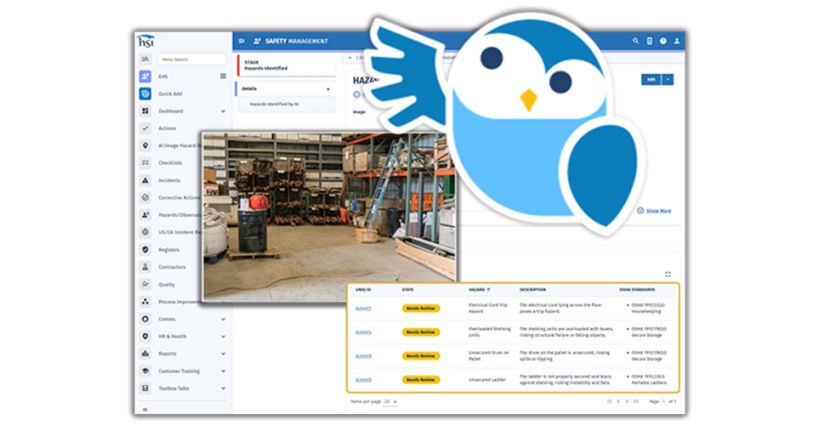
Patented AI in EHS software means the vendor has protected a specific technical method. What matters more is how the technology works in real safety programs. When AI helps teams spot hazards earlier, analyze incident patterns, and connect those signals to training, organizations can respond faster and prevent repeat incidents. Linking hazards, corrective actions, and learning in one system helps safety teams strengthen prevention and keep clear compliance records.
What does patented AI mean for EHS teams?
For EHS teams, patented AI should signal that a vendor has protected a specific technical method. It doesn’t mean the tool is automatically accurate, compliant, or suitable for your workplace.
What matters is whether the technology actually helps safety professionals do their jobs better. In practice, that means reducing the gap between identifying a hazard and taking action to correct it.
A useful reference point comes from the NIST Artificial Intelligence Risk Management Framework (AI RMF 1.0). NIST explains that trustworthy AI systems should demonstrate several qualities that support safe and responsible use in real-world operations.
According to NIST, trustworthy AI should be:
Valid and reliable
Safe, secure, and resilient
Accountable and transparent
Explainable and interpretable
NIST also notes that the framework is voluntary guidance for the design, development, use, and evaluation of AI systems. That guidance helps organizations move beyond marketing claims and focus on whether a system actually supports responsible decision-making.
For safety leaders, these principles provide a practical way to evaluate AI tools. Instead of focusing on whether the technology is patented, it’s more useful to ask how the system performs in everyday safety workflows.
A helpful evaluation lens looks like this:
What to ask | What good looks like for EHS teams |
Is the system valid and reliable? | It produces consistent results when reviewing similar incidents, hazards, or inspection records. |
Is the system explainable? | Users can understand why the system recommends a corrective action or training assignment. |
Is the system transparent? | The platform shows its data sources or confidence indicators when possible. |
Is the system fit for the work environment? | It operates effectively in real plants, jobsites, warehouses, and field environments. |
Does it support action? | The system helps teams assign inspections, track corrective actions, trigger retraining, and maintain documentation. |
Evaluating AI through trust and usability helps safety teams look past the patent label and focus on operational value. The next question is how those capabilities translate into stronger, proactive safety management.
How does patented AI help proactive safety management?
Patented AI supports proactive safety management when it helps teams detect risk patterns early and act before incidents escalate. Instead of waiting for injury reports or compliance reviews, safety teams can identify warning signs and address them while the issue is still small.
This approach aligns with OSHA guidance on hazard identification and assessment. OSHA recommends that employers regularly inspect the workplace, investigate incidents and near misses, group similar events, identify patterns, and prioritize corrective actions.
Those tasks are essential, but they also generate large amounts of data. Inspection notes, observation reports, incident records, and corrective action logs quickly accumulate across multiple sites and teams.
AI becomes valuable when it helps analyze that information quickly and consistently. Instead of manually reviewing spreadsheets, emails, and disconnected reports, the system can scan large safety datasets and surface patterns that deserve attention.
Consider a food manufacturing facility that records three minor slip incidents over six weeks:
One occurs near a washdown area
One happens during equipment changeover
One occurs near pallet staging
Viewed individually, these incidents may look unrelated. When analyzed together, they may point to a broader issue with drainage, floor conditions, or housekeeping procedures.
A well-designed AI system can connect those signals and highlight the emerging pattern. The platform can then recommend follow-up inspections, assign corrective actions, and alert supervisors so the issue gets addressed quickly.
Detecting patterns earlier helps teams address hazards before they escalate into injuries or repeat incidents. The next step is making sure those safety signals connect directly to worker training and follow-up actions.
How does LMS and EHS integration improve workplace safety?
A unified Learning Management System, LMS, and Environmental Health and Safety, EHS, platform matters because safety events often trigger training requirements. When incidents, hazards, corrective actions, and training records live in the same system, safety teams can respond faster and avoid missed follow-ups.
OSHA regulations already create situations where new hazards must lead to updated training. Under the Hazard Communication Standard, 29 CFR 1910.1200(h), employers must train workers at initial assignment and whenever a new chemical hazard enters the workplace. OSHA also requires Safety Data Sheets (SDSs) to remain accessible during each work shift.
That requirement creates a practical challenge. Hazard information often sits inside safety systems, while employee training records live somewhere else. When those systems are disconnected, it slows the response and increases the risk that workers continue operating without updated guidance.
Forklift operations show how quickly training triggers can occur in everyday work. Under 29 CFR 1910.178(l)(4)(ii), refresher training becomes necessary after several types of events:
Unsafe operation
An accident or near-miss incident
A poor operator evaluation
Changes to the truck or workplace environment
OSHA also requires employers to evaluate each forklift operator at least once every three years and certify the training and evaluation.
These requirements highlight why connected systems matter. A safety event should trigger a review, and that review may lead to retraining or skill evaluation.
In a disconnected environment, that chain of events relies on manual communication between teams. In a unified system, the process becomes much clearer and easier to track. That kind of connected workflow is where AI tools like Sky begin to deliver practical value.
How HSI Helps EHS Teams Put Patented AI to Work
HSI helps organizations manage workplace safety, compliance, and workforce training through one connected platform. At the center of that system is Sky, HSI’s AI-powered safety assistant built specifically for EHS environments.
Sky connects safety data, training content, and regulatory knowledge so teams can move faster from hazard detection to corrective action and documented follow-up.
With Sky inside the HSI platform, EHS teams can:
Identify emerging risks earlier: Sky analyzes incident reports, inspections, and observations to surface patterns that may signal new hazards.
Turn incidents into corrective action: The system recommends next steps, assigns tasks, and tracks completion so teams can close safety gaps faster.
Connect safety events to training: When patterns appear, Sky can recommend targeted learning paths for the roles involved.
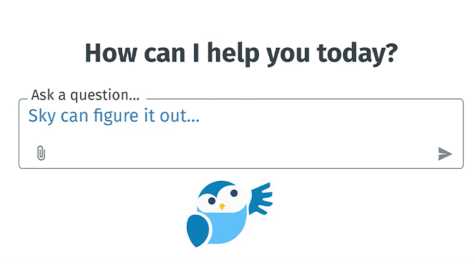
Analyze safety records instantly: Teams can ask questions in plain language and receive summaries of incidents, trends, and contributing factors.
Support proactive hazard recognition: Sky can review uploaded photos to flag potential safety concerns and suggest corrective actions.
If you want to see how AI can support real safety workflows, schedule a demo of the HSI platform and Sky AI assistant. You will see how incident data, inspections, corrective actions, and employee training can work together inside one system to help your team prevent incidents and maintain clear compliance records.
FAQ
What is patented AI in EHS software?
Patented AI in Environmental Health and Safety, EHS, software means the vendor has protected a specific technical method used by the system. The patent protects the invention from being copied, but it does not prove the software meets OSHA requirements or guarantees safety outcomes. EHS teams should judge the technology by how well it helps identify hazards, assign corrective actions, and support worker training.
How can AI improve hazard identification in workplace safety programs?
AI can review large volumes of safety data quickly, including inspection notes, incident reports, safety observations, and images from the field. This helps safety teams detect patterns, recurring hazards, and early warning signals that might otherwise be missed. Faster hazard identification allows organizations to act earlier and reduce the chance of injuries or repeat incidents.
Why is connecting an LMS with an EHS system important for safety management?
A unified Learning Management System, LMS, and EHS platform connects incidents, hazards, corrective actions, and employee training records in one place. When a safety event occurs, the system can trigger targeted retraining or learning assignments for the affected roles. This helps organizations respond faster, maintain documentation, and meet OSHA training requirements.
Can AI replace safety professionals in workplace safety programs?
AI cannot replace safety professionals or employer responsibilities under OSHA regulations. Employers still must identify hazards, implement controls, train workers, and maintain documentation. AI works best as a decision support tool that helps EHS teams analyze safety data faster and prioritize the next action.
What types of safety tasks can AI assist with in EHS platforms?
AI in EHS platforms can assist with incident analysis, hazard recognition from images, inspection summaries, corrective action recommendations, and training recommendations based on safety events. These capabilities help reduce manual administrative work and allow safety teams to focus more on preventing hazards and improving workplace safety programs.
Related Articles
AI for Workplace Safety Starts Here: Meet Sky™
Meet Sky™! What Happens When You Ask Sky a Safety Question? | HSI
Emergency Care
Trusted AI in Safety Software Explained
What Is Trusted AI in EHS software?
Workplace Safety
Context-Aware AI vs Search in Safety
What Makes AI Context-Aware in Safety | HSI
Workplace Safety