The Missing Link in Safety Programs: Why Psychological Safety Matters
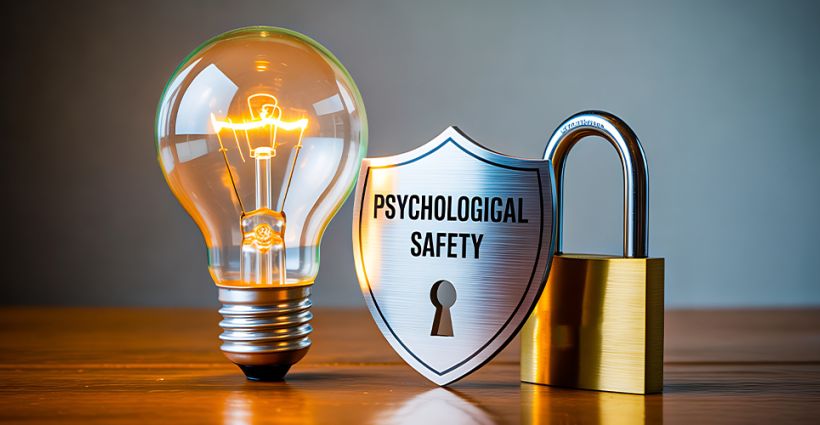
You’ve invested in PPE, written policies, and safety audits. So why are preventable incidents still happening? Here’s the hard truth: people often don’t speak up when something feels off. Not because they don’t care, but because they don’t feel safe doing it. They worry about looking bad, being blamed, or wasting someone’s time.
This silence is dangerous. It hides near misses. It delays hazard reports. It weakens your safety program at the foundation. Psychological safety, where workers feel safe to ask questions, admit mistakes, or challenge decisions without fear, might be what’s missing. In this article, we’ll explain what psychological safety means, why it matters for risk reduction, and how leaders can help build it.
What Is Psychological Safety in the Workplace?
Psychological safety means that team members feel comfortable being honest, even when the stakes are high.
They trust that they won’t be ignored, punished, or embarrassed for:
Pointing out a hazard
Asking for clarification
Sharing a mistake
Disagreeing with a procedure
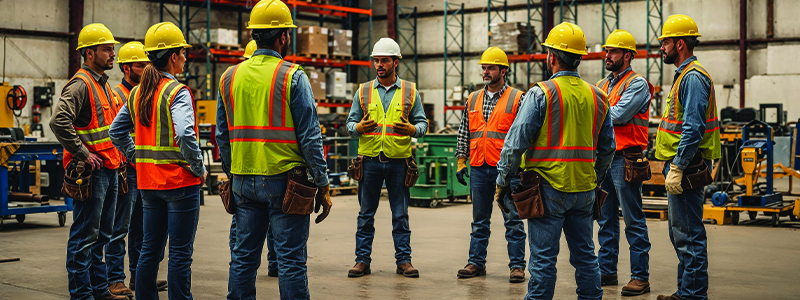
Think about a new worker unsure if a scaffold is secure. Will they speak up if they’re unsure? Only if they feel safe enough to be wrong. It plays out daily, in toolbox talks, safety meetings, and the moment someone decides whether to submit that near-miss report.
Leadership Makes or Breaks Psychological Safety
Culture doesn’t change by accident, it changes by example, and in every workplace, eyes are on leadership. How leaders listen, respond, and follow through shapes whether people feel safe speaking up or staying silent.
Here’s what builds psychological safety:
Listening without interrupting
Thanking people for questions or concerns
Being honest about what you don’t know
Asking for feedback, and acting on it
These small actions send a big message: “You matter here.” When that message is consistent, it becomes part of how teams operate. A crew leader who pauses a meeting to acknowledge a worker’s concern, even if it’s off-topic, builds more safety culture than any poster or slogan.
Here’s what destroys psychological safety:
Dismissing concerns with “we’ve always done it this way”
Punishing people for reporting mistakes
Ignoring feedback loops
When workers see input being ignored, they stop giving it. When they see mistakes weaponized, they hide them. Over time, those reactions become habits. Leaders don’t need to have all the answers, but they do need to make it clear that speaking up is not just allowed, it’s expected.
When leaders make safety a conversation, not a command, they create teams that look out for each other and speak up without fear.
How Psychological Safety Connects to EHS Strategy
Most safety systems focus on rules, compliance, and equipment, but those tools only work if people use them and report when they don’t.
When workers feel safe to speak up, they’re more likely to:
Follow protocols consistently
Share workarounds that expose hidden risk
Contribute ideas for safer workflows
This improves both day-to-day performance and long-term safety outcomes. It also closes the gap between policy and practice. Many companies have strong written procedures, but in the field, workers develop shortcuts. Not all of them are unsafe, but some are. When teams feel safe, they’ll bring those shortcuts into the open. Leaders can then separate smart improvements from risky improvisations.
You can also measure it. Look at:
Reporting trends (Are near misses going up or down?)
Participation in safety meetings
Feedback during culture assessments or pulse surveys
These signals show whether people trust the system. A drop in reporting after a policy change? That’s not just a data dip, it might be a trust issue. Data gives you a window into trust. When people trust the system, they use it.
Barriers That Get in the Way of Psychological Safety
Some challenges are easy to spot. Others aren’t.
Cultural and structural blocks:
“Top-down” environments where only leaders speak
Language barriers in diverse workforces
Fear-based reporting systems tied to discipline, not learning
These show up in environments where feedback flows one way. Workers hesitate, not because they don’t care, but because the system tells them their voice doesn’t matter, or worse, that speaking up might backfire.
Behavioral habits:
Interrupting or ignoring input during meetings
Subtle sarcasm or body language that shuts down conversation
Rewarding results without asking about the process
These habits often go unnoticed. A safety manager who praises a team for zero incidents, without asking how they achieved it, may unknowingly reward silence. A supervisor who rolls their eyes at a concern might only do it once, but the damage sticks.
Once you know what’s getting in the way, you can start removing those barriers, one habit, one conversation, one leader at a time. However, creating a safer culture takes more than good intentions; it takes the right tools, delivered at the right time.
How HSI Supports Stronger Safety Cultures
At HSI, we know that a strong safety culture isn’t driven by policies alone, it’s powered by people. And real change starts when workers trust the system and each other. That’s why our tools are built to help teams speak up, take action, and stay connected.
Our training library builds the skills that make safety conversations possible. We go beyond check-the-box compliance. Our courses focus on the real-world communication and awareness skills that teams need to work together safely, including:
Communication and conflict resolution
Emotional intelligence
Giving and receiving feedback under pressure
These skills help teams reduce friction, build trust, and speak openly, even when the stakes are high.
HSI’s EHS System makes it easy to turn concerns into action. From inspections to daily tasks, workers can submit issues in real time. Supervisors can respond quickly, close the loop, and keep everyone informed. That responsiveness shows workers their voice matters, and that speaking up leads to results.
And with HSI Intelligence, you get clarity on what needs attention most. Our AI-driven capabilities identify patterns that often point to deeper cultural issues, like recurring near misses or breakdowns in communication. Then we recommend targeted training to help teams shift behavior before problems repeat.
If you want to strengthen your safety program, start by building a culture that invites participation. Let HSI help you get there, with the training, technology, and support to turn silence into shared accountability.
Related Articles
The Future of Utility Worker Safety: AI Meets Human Expertise
How AI Supports Utility Worker Safety and Reduces Risks
Industrial Skills

Don’t Forget the Human Element of Your Safety Program
As the landscape of construction, manufacturing, and utility sectors evolves, this eBook underscores the importance of...
Resources
Incorporating Employee Wellness into EHS Programs
Workplace Safety
