Ways to Lead to Retain Employees

Employee retention problems? Free snacks, paid parking, or remote work not cutting it?
Research shows that employees stay when their manager helps them feel supported, challenged, and valued. And this doesn’t happen by accident. It unfolds through intentional leadership and a positive workplace culture.
Business leaders who focus on retention don’t wait and hope people become long-term employees. Instead, they create conditions that make great employees want to stay.
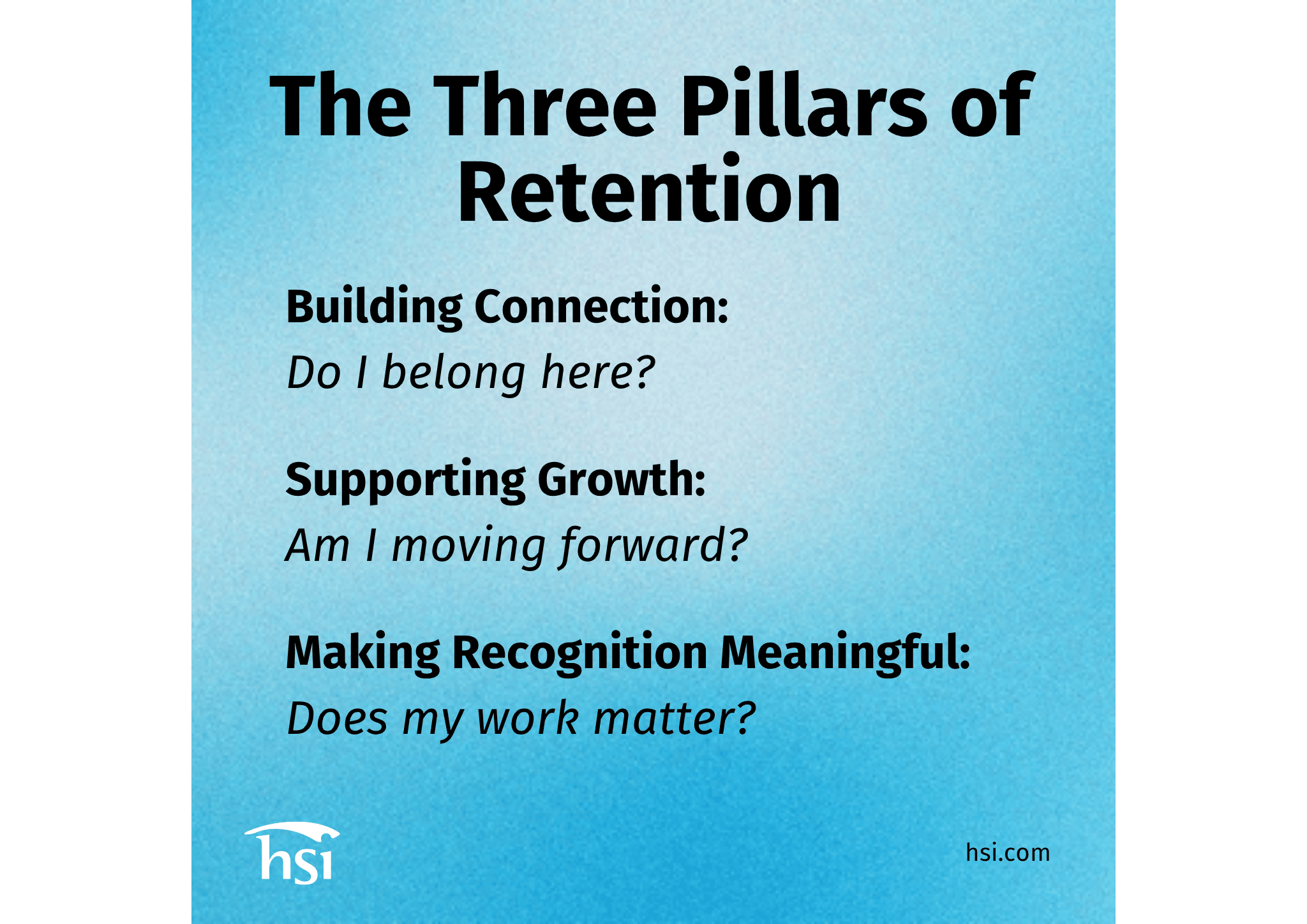
The Three Pillars of Retention
A strong culture of retention consistently reinforces three things:
- Building Connection: Do I belong here?
- Supporting Growth: Am I moving forward?
- Making Recognition Meaningful: Does my work matter?
If even one of these weakens, employee engagement starts to fall, and employee turnover begins.
First Pillar: Building Connection
Connection starts with psychological safety. Teams need to feel comfortable asking questions, offering ideas, admitting mistakes, and disagreeing respectfully. When employees worry about being dismissed or embarrassed, they often stop contributing long before they leave the company.
Those in leadership roles set the tone by consistently communicating with their direct reports. Silence leads to speculation, whereas open communication builds trust. Connection grows through steady, reliable leadership, such as:
- providing a strong onboarding experience for all new employees before Day 1, as this is the first meaningful interaction they’ll have.
- setting aside regular one-on-ones for direct reports to talk through challenges, ask questions, and raise concerns before they turn into bigger issues.
- asking open-ended questions like, “What am I missing?” or, “What would make this process smoother?”
- admitting not knowing the answer.
- being transparent when priorities shift or changes are coming strengthens the connection.
- thanking employees for raising concerns about such things as tight deadlines or unrealistic goals.
- giving and receiving regular feedback, both positive and constructive.
- routinely asking what the organization could do better.
- sharing institutional knowledge.
Second Pillar: Supporting Growth
High-performing employees don’t usually leave because they dislike working hard. They leave when they feel stuck and don’t see professional development opportunities on the horizon.
Career growth conversations should go beyond performance metrics. Instead of leaders asking, “Are you meeting your goals?” try:
- “What skill sets do you want to develop this year?”
- “What experiences would help you grow?”
- “Where do you see yourself in five years?”
Growth doesn’t always mean promotion. It might look like leading a cross-functional project, mentoring new hires, shadowing another team, or developing deeper expertise.
What matters is that career growth is visible. Employees should be able to see how their current work connects to future opportunities. When career advancement requires specific competencies, clarity is critical. Unclear growth potential leads to disappointment and disengagement.
Leaders should ensure a healthy work-life balance for all their employees. Top performers often take on increasing responsibility. That can feel like growth until it feels like burnout. Regular check-ins help ensure the increased workload stays energizing rather than exhausting.
When people see a clear path for growth, they’re less likely to look elsewhere for a new opportunity.
Third Pillar: Making Recognition Meaningful
Recognition is more than a quick “good job” mention. Specific acknowledgment reinforces the behaviors leaders want to continue seeing.
Instead of vague praise, leaders should call out what made the impact:
“Your preparation before the presentation helped the team feel more confident.”
Employee recognition should happen both publicly and privately. Public acknowledgment reinforces company culture, while private appreciation strengthens trust.
It’s also important to connect effort to purpose to deepen commitment. Senior leaders should share how employees understand the impact of their work on customers, colleagues, or broader goals.
Fairness matters here, too. Leaders should pay attention to whoever gets recognized and who might be overlooked. Quiet contributors often play a critical role in keeping teams stable and moving ahead.
And while rewards can be valuable, employee recognition doesn’t have to cost anything. What matters most is thoughtful, consistent recognition.
Don’t Wait for Exit Interviews; Use Stay Interviews
Many HR leaders rely on exit interviews to understand why employees leave. Stay interviews are one example of modern retention strategies. They start the conversation earlier, when there’s still time to prevent top talent from leaving.
Stay interviews explore:
- What employees value
- What motivates them
- What might cause them to leave
These conversations might include questions like:
- “What makes your work meaningful right now?”
- “What might cause you to explore other opportunities?”
- “What support do you need more of from us?”
Not every concern can be solved immediately. Some significant factors may be outside anyone’s control. But listening and acting, when possible, shows that leaders care about one’s career.
Stay interviews can also reveal patterns. If multiple team members raise the same concerns, that insight becomes a powerful opportunity for improvement. Employee turnover rates drop when leaders ask questions before employees update their resumes.
What Stay Interviews Look Like in Practice
A manager noticed a change in one of the department’s top performers. The work was still getting accomplished, but their engagement levels changed. They participated less in meetings and did not take the same level of initiative as in the past.
Instead of addressing performance, the manager scheduled a conversation focused on the employee’s experience. Rather than using the typical performance management routine of putting the employee on a performance improvement, the manager took a more positive approach to get to the heart of the issue. Asking open-ended questions helped uncover that the employee’s work felt repetitive and disconnected from a larger purpose.
Together, they identified new skills the employee wanted to build and found an opportunity to lead a cross-functional initiative.
As a result of the ongoing one-on-ones, engagement and visibility improves and better insight into the broader team occurs. Employee expectations are being met, and a supportive work environment results. And, even more good news, the employee stays.
HSI Can Help
Is your organization experiencing high turnover? Are you losing your best talent? If several new employees joined your organization today, would they clearly see how they fit, how they can grow, and how their work matters?
The employee retention rate results from consistent leadership behaviors that build trust and commitment over time.
- Connection builds belonging
- Growth builds momentum
- Recognition builds meaning
Contact us to learn how our leadership training can help leaders enhance the skills they need to build stronger connections, support employee growth, and make recognition meaningful.
Related Articles
Training and Development: An Integral Part of Employee Recruitment and Retention
Recruitment and retention. VERY important words to a company's successful future. Learn the benefits of training and...
Employee Training & Development

Strategic Onboarding Training
Download our eBook to gain insights on how to achieve your new hires’ peak performance sooner, have early “wins” under...
Resources

Leadership
Virtual leadership training for your high-potential employees and managers. In addition to the tried-and-true...
Employee Training & Development