Active Shooter Training
Active Shooter Training Programs and Preparedness Resources for Organizations
Active violence incidents are unpredictable and can develop quickly. Organizations of every size and industry should evaluate how employees, volunteers, visitors, and other people on site would recognize danger, communicate during an emergency, and respond before professional help arrives.
Active shooter response training is one part of that preparation. It can help people understand available response options, strengthen situational awareness, practice decision-making, and identify actions that may be needed during the first critical moments of an emergency. Training should support, not replace, an organization's emergency action plan, security procedures, communication systems, and coordination with first responders.

Why Organizations Should Consider Active Shooter Response Training
A written emergency plan is important, but employees also need to understand what the plan means for them in a rapidly changing situation. Official preparedness resources from FEMA, the FBI, the Department of Homeland Security, and CISA all address the role of civilian preparation, response options, emergency planning, warning signs, and communication during active shooter incidents.
Depending on the program, active shooter training may help participants:
- Recognize warning signs and changes in their surroundings.
- Understand evacuation, sheltering, access-denial, and last-resort response options.
- Respond to emergency notifications and share useful information.
- Practice making decisions through guided scenarios or drills.
- Understand what to expect when law enforcement arrives.
- Provide immediate bleeding control or other emergency aid when that content is included.
No course can guarantee that violence will be prevented or that a specific action will produce a particular outcome. The purpose of training is to reduce uncertainty, establish a shared response framework, and give participants practical information they can use alongside the organization's broader safety plan.

What Active Shooter Response Training May Include
Course content varies by provider, audience, delivery method, and facility. When researching active shooter training programs, organizations may encounter the following topics:
Situational Awareness
Recognizing what is happening, identifying possible warning signs, and paying attention to changes in the environment.
Response Options
Understanding when to move away from danger, secure a location, communicate information, or take defensive action as a last resort.
Emergency Communication
Knowing how to report an incident, activate emergency services, receive alerts, and provide accurate information.
Scenario-Based Practice
Applying course concepts through demonstrations, guided exercises, drills, or other practice activities.
Emergency Bleeding Control
Learning how to recognize life-threatening bleeding and use appropriate techniques until professional medical care is available.
Organizational Planning
Connecting employee actions to evacuation procedures, sheltering plans, assembly locations, site security, and emergency response responsibilities.
Active Shooter Training Programs And Public Preparedness Resources
The following programs and resources are available to organizations, employees, volunteers, and community members. Each uses its own terminology, structure, and delivery model. Program content and availability may change, so current details should be confirmed through the official source.
Program or Resource |
Organization |
Resource Type |
Publicly Described Focus |
HSI |
Civilian and organizational training program |
Situational awareness, warning signs, Escape, Evade, Attack response options, scenario-based practice, and emergency bleeding control using an instructor-led training format. |
|
Navigate360 |
Civilian active shooter response training program |
Alert, Lockdown, Inform, Counter, and Evacuate as non-sequential response options, with online and instructor-led training formats. |
|
U.S. Department of Homeland Security |
Public preparedness booklet |
General guidance on recognizing and responding to an active shooter incident, emergency planning, and law enforcement response. |
|
FEMA National Disaster and Emergency Management University |
One-hour online independent study course |
Prevention, response, recovery, warning signs, reporting concerns, law enforcement priorities, and assistance during bleeding emergencies for non-law-enforcement audiences. |
|
Federal Bureau of Investigation |
Two-hour instructor-led civilian course |
Multimedia instruction, in-person demonstrations, two practice scenarios, Run, Hide, Fight, and bleeding-control procedures. |
|
Cybersecurity and Infrastructure Security Agency |
No-cost preparedness resources and training |
Emergency action planning, warning signs, protective security, webinars, audience-specific materials, videos, and translated resources. |
What AVIRT Training Includes
AVIRT Active Shooter Response Training stands for Active Violence Immediate Response Training. HSI describes AVIRT as a civilian-focused program that has been adapted by professionals with experience in law enforcement, security, and medicine for use by the general public and organizations across multiple industries.
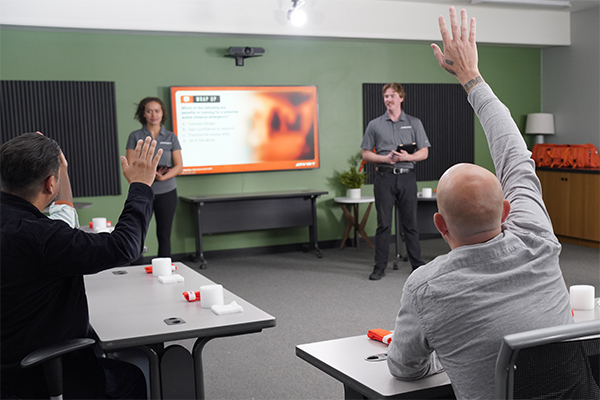
AVIRT combines online preparation with instructor-led, in-person training. The public HSI program materials describe video-based learning, dynamic hands-on instruction, realistic drills, practice throughout the session, and encouraging instructor feedback. Class sizes are limited to 15 participants per authorized instructor.
The program covers:
- Situational awareness and recognition of potential warning signs.
- The Escape, Evade, or Attack response framework.
- Scenario-based exercises and guided practice.
- Emergency bleeding control, including direct pressure, wound packing, and tourniquet application.
- The role of an immediate responder who may be in a position to help before law enforcement or EMS can reach the injured person.
Organizations can request AVIRT training for their team or develop internal training capability through the AVIRT Instructor Development Course.

Why Bleeding Control Is Part of Active Violence Preparedness
During an ongoing active violence incident, the first priority of responding law enforcement is to stop the threat. Access to injured people may be delayed until the scene is safer, which can leave employees and bystanders in the position of providing immediate help.
Severe blood loss can become fatal within minutes. AVIRT integrates emergency bleeding control training into the same program as active violence response.
During training, AVIRT participants practice three basic bleeding-control techniques:
- Apply direct pressure to a serious wound.
- Pack a wound when appropriate.
- Apply a tourniquet when appropriate and when trained to do so.
Reading about these techniques is not a substitute for hands-on instruction. Practical training gives participants an opportunity to use training equipment, receive feedback, and build familiarity with the steps involved.

Active Shooter Training Can Be Practical Without Being Sensational
Some employees may hesitate to participate because they expect active shooter training to be frightening or overly intense. Responsible training should match the audience, explain the purpose of each activity, and provide a controlled environment for learning and practice.
HSI describes AVIRT as using realistic drill scenarios with encouraging feedback in a supportive learning environment. Active shooter education can be designed around preparation, clarity, and confidence rather than surprise or unnecessary shock.
Organizations concerned about employee reluctance can also review HSI's article on common myths about active shooter training.

How to Research Active Shooter Training Options
Organizations should review official materials, speak directly with providers, and evaluate how a program fits their people, facilities, policies, and emergency plans. Useful questions include:
- Is the program designed for civilian participants and the organization's specific audience?
- Is the course online, in person, blended, or available in multiple formats?
- Does the course include instructor-led practice or scenario-based exercises?
- Does it include emergency bleeding control, or would separate medical training be needed?
- How are drills conducted, and how does the provider maintain a controlled learning environment?
- What qualifications and authorization requirements apply to instructors?
- Can the program be adapted to the organization's industry, site, employees, visitors, and accessibility needs?
- What certificate, credential, or documentation is provided?
- How often does the provider recommend refresher training?
- How will the training connect with the organization's emergency action plan, notification system, security measures, and evacuation procedures?
For additional guidance, see HSI's article on choosing an active shooter training program.

Training Is One Part of a Broader Preparedness Program
Active shooter response training should work alongside other organizational measures. Depending on the facility and workforce, those measures may include emergency communications, site security, evacuation routes, safe assembly locations, emergency equipment, written procedures, employee reporting channels, drills, and coordination with local first responders.
HSI has additional resources on active shooter drills in the workplace and training to help prevent workplace violence. Government resources from CISA, FEMA, DHS, and the FBI can also help organizations review preparedness beyond a single training course.

Research the Options and Build a Preparedness Plan
Organizations do not all have the same workforce, facility, risks, or training needs. Reviewing official program information, government preparedness resources, course delivery methods, instructor qualifications, hands-on components, and emergency medical content can help decision-makers understand the available options.
No training program can guarantee that an incident will be prevented or that a particular outcome will occur. Thoughtful preparation can, however, give people a clearer understanding of what to do, how to communicate, and how to provide immediate help when time matters.
Learn more about AVIRT Active Shooter Response Training or contact an AVIRT specialist to discuss training for your organization.
Related HSI Resources
- AVIRT Active Shooter Response Training
- AVIRT Training for Organizations
- AVIRT Emergency Bleeding Control Training
- Become an AVIRT Instructor
- Overcoming Workplace Reluctance: Addressing Common Myths About Active Shooter Training
- Choosing the Right Active Shooter Training Program: 4 Factors for Businesses to Consider
- The Importance of Active Shooter Drills in the Workplace
- Importance of Training to Help Prevent Workplace Violence
Frequently Asked Questions
Active shooter incidents can evolve quickly. Training can help employees recognize danger, understand response options, communicate during an emergency, and connect the organization's written plan to practical actions.
Content varies by provider, but common elements include situational awareness, warning signs, response options, emergency communication, evacuation or sheltering procedures, and scenario-based practice. Some programs also include emergency bleeding control.
Examples include HSI's AVIRT program, ALICE Training, the DHS Active Shooter: How to Respond booklet, FEMA's IS-907.A course, the FBI's ASAPP course, and CISA's active shooter preparedness resources. This is not an exhaustive list.
HSI states that AVIRT was adapted for civilian participants and does not require a law enforcement, military, security, or medical background.
AVIRT includes situational awareness, warning-sign recognition, Escape, Evade, or Attack response options, scenario-based practice, and emergency bleeding control.
Yes. HSI integrates active violence response and emergency bleeding control in the same AVIRT program.
No. Programs can use controlled instruction, clear expectations, demonstrations, guided practice, and supportive feedback. Organizations should ask providers how exercises are conducted and how the course is adapted to the audience.
Online instruction can introduce concepts and terminology. Programs with an in-person component also provide opportunities for guided practice, feedback, and scenario-based application. The appropriate format depends on the organization's goals and needs.