Rethinking Workplace Safety Beyond Compliance
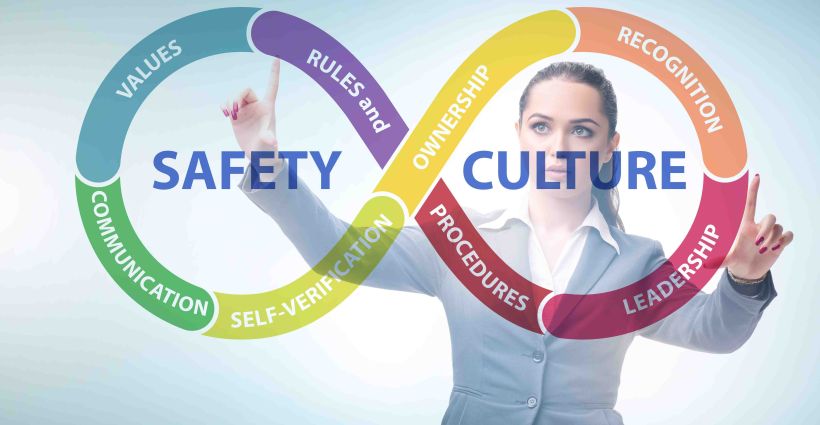
Workplace safety is not just compliance; it goes far beyond this. Yes, June is National Safety Month, a time for organizations in the United States to raise awareness around workplace safety hazards, injury prevention, and employee well-being. But safety should be ongoing, every day of the year imbedded in the organization’s culture.
With National Safety Month upon us, now is a great time for safety professionals, HR leaders, and learning and development (L&D) teams, to prioritize workplace safety best practices.
- Review compliance requirements.
- Reinforce OSHA policies and other occupational safety standards.
- Evaluate current safety training programs.
- Schedule worker refresher training.
However, meeting the standards of compliance-based safety programs is just the beginning. Building a true workplace safety culture calls for more than just the minimum standard.
When business leaders build a workplace culture where workers recognize and understand risks and actively engage in injury prevention daily, the result is sustainable safety improvements. Regulations and compliance training definitely aids organizations avoiding citations; however, it does not guarantee a safe workplace.
It’s time now to make the shift. Even with decades of progress in workplace safety standards, injury and fatality numbers are way too high. Recent U.S. Bureau of Labor Statistics data confirms that thousands of workplace fatalities and millions of nonfatal workplace injuries and illnesses occur each year in the United States. Over time, some industries see improvement, but others continue to face ongoing, and for some, increasing risk.
Safety professionals, HR leaders, and L&D teams need to ensure they’re just not complying with the basic safety requirements but are intentionally fostering a safety-first culture to protect their workforce.
The Reality
Workplace injury data continues to point to continuous occupational safety challenges. When reviewing workplace safety data, leaders must remember to analyze the patterns the numbers reveal.
Transportation incidents result in workplace fatalities with truck drivers and material movers as the highest contributors. Construction jobs are high-risk. Health care workers continue to see high rates of injury and illness.
Nonfatal injuries, like sprains, strains, fractures, and musculoskeletal disorders also continue to plague workers from all industries. They can happen anywhere: manufacturing plants, warehouses, hospitals, and even office buildings.
The reality is that workplace safety compliance matters, but safety culture must be an integral part of the day-to-day employee experience and business success strategy. Without this, organizations experience:
- Reduced productivity.
- Lower engagement levels and poor morale.
- Greater employee absenteeism and turnover.
- Increased workers’ compensation costs.
Workers must feel safe, prepared, and empowered to handle any risks to be a high-performing team.
The Why and the How
Workplace injury data clearly shows that risk levels aren’t arbitrary. They depend upon the nature of the work. A construction worker who lifts wood is more likely to experience strains and musculoskeletal injuries. The more time a truck driver spends driving on the highway, the more likely they’ll be involved in an accident. A nurse in a pediatrician’s office who is exposed to multiple types of viruses may get ill more often than a supervisor in an office setting.
This certainty is actually a good thing! Knowing the specific risks employees may encounter allows leaders to take a proactive approach and develop more useful safety training programs. The training should help employees recognize and respond to potential hazards. In turn, this creates a safer workplace before an accident strikes.
A great deal of organizations fall short as annual compliance training rarely results in long lasting employee behavioral change. Only this type of change exists when workers consider safety in their daily choices. This includes voicing potential hazards and stopping work when something does not feel right.
Human factors, like fatigue, stress, distraction, and quick decision-making, directly influence how workers respond to risk.
The most effective safety training programs don’t just teach the rules but reflect real-world scenarios. This teaches why the rules matter and how those rules apply when on the job.
The Responsibility Factor
Building a safety culture is everyone’s responsibility. Annual training is a necessity, but building a proactive occupational health and safety strategy requires a systems-based approach with the responsibility of not laying only on EHS teams.
Responsibilities may vary by team with safety leaders setting standards and managing risk, HR departments documenting and communicating policy and L&D charting out how training is delivered and reinforced. Managers play a critical role in reinforcing safe behaviors and daily workplace safety practices. Employees make the ultimate decisions in real time.
Safety culture begins with documentation and continues with working across teams, roles, and everyday safety behaviors.
As the workplace continues to evolve, hybrid and remote roles, staffing challenges, increased operational demands, and burnout are part of today’s reality. New occupational health challenges continue to evolve that may not align with standard safety practices.
Safety concerns exist everywhere, even in a work environment like an office. Falls, poor ergonomics, and repetitive strain injuries can be a real risk to organizations and employees.
Business leaders must understand all the details of a given work environment and see that safety is consistently practiced daily.
The Engagement Level
Effective safety training, when presented in a thoughtful manner, is more than “just safety training.”
Employees recognize when organizations invest in their well-being:
- When workers know their organization appreciates them, engagement levels increase.
- If safety goals are relevant and consistent, the employee experience improves, and in turn, so does the workplace culture.
- Employees who feel supported will report safety hazards and take safety seriously. They realize their actions contribute to both safety performance and a safer environment.
When safety training is not relevant or dated, employees quickly disengage. The training becomes a checkbox, not something to put into practice. L&D teams can make a purposeful difference.
Today’s learners desire training that’s accessible, flexible, and relevant to their responsibilities. When safety training programs use real-life scenarios and the learnings are reinforced consistently, not just once a year, they are more likely to result in safe job behaviors.
The Ongoing Process
Business leaders acknowledge that safety doesn’t begin and end at work. The same safety habits apply on the job, at home, and on the road. Whether you’re identifying trip hazards, avoiding distractions while driving, or handling dangerous chemicals, these behaviors and habits can keep you safe.
Off-the-job injuries affect employee attendance, workplace productivity, and workforce integrity. When organizational leaders support employee safety beyond the workplace, they’re reinforcing a safety culture that values their employees, not just their job performance. Employees recognize and remember this.
The Daily Priority
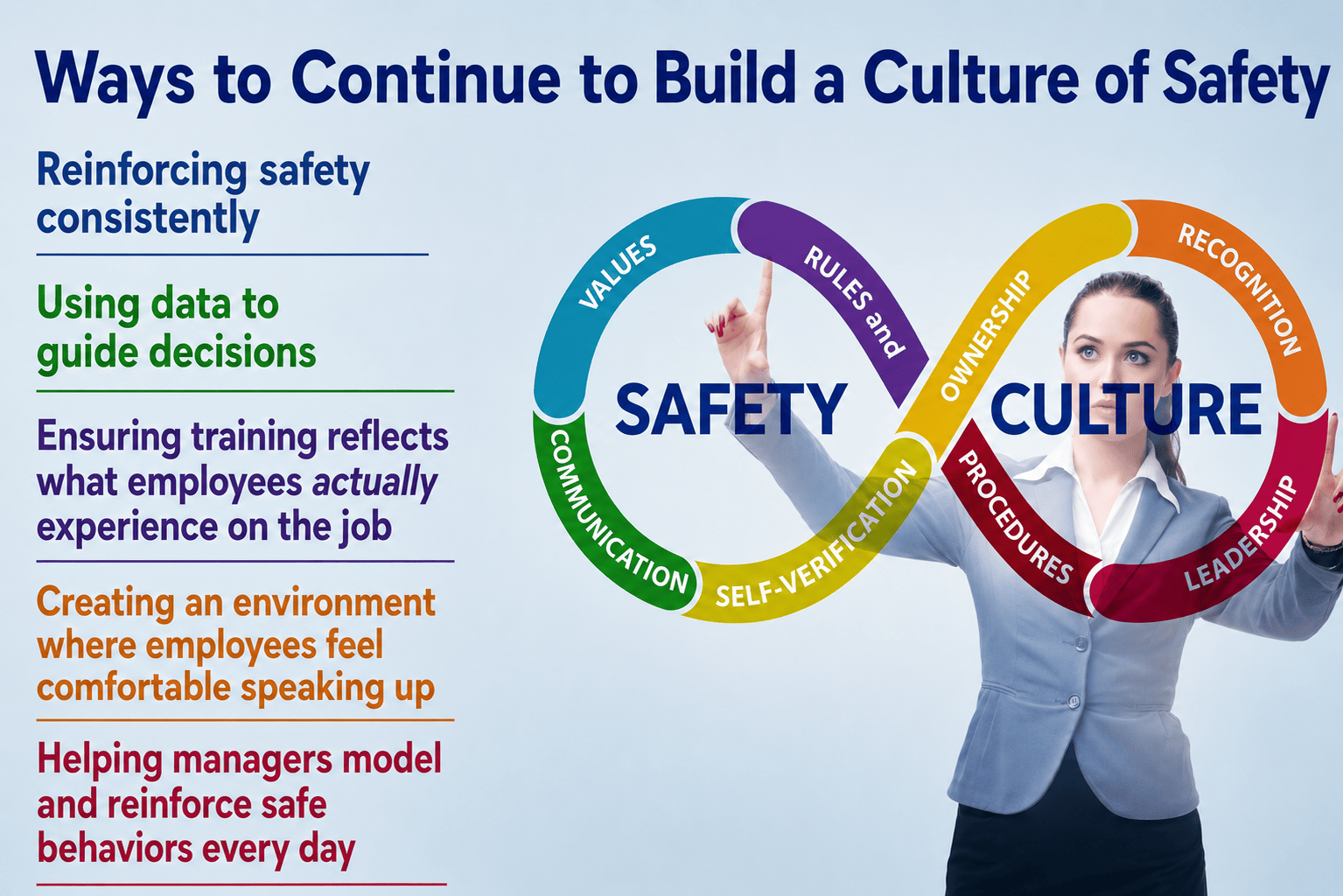
Safety is a daily priority if organizations want to see real improvement and continue building a culture of safety not just during National Safety Month but throughout the year. Organizations can do this by:
- Consistently reinforcing safety.
- Guiding decisions by utilizing data.
- Ensuring training represents real-world scenarios.
- Creating a psychologically safe workforce.
- Empowering managers to practice and reinforce safe behaviors daily.
Bottom line: safety training isn’t about checking the compliance box. It’s about ensuring that every team member arrives home safely. And that everyone knows how to stay safe at work, at home, and on the road.
HSI Can Help
A proactive approach is required to create a safe workplace. Policies alone are not enough. Creating a safe workplace requires ongoing training, frequent reinforcement, strong safety practices, and committed leadership support.
HSI helps organizations build a safer workplace with training solutions that support all employees. From workplace safety and compliance to soft skills, with our scalable content employees are prepared for the risks they face, wherever they are.
The best safety programs don’t just help organizations stay compliant. They help you protect your workers, reduce risk, and support long-term business success.
Contact us to discuss how HSI’s training solutions can help your workforce stay safe, prepared, and performing at their best. Reach out today to build a safer workplace.
Related Articles
Why Compliance Training is More Than a Checkbox
Does your organization treat compliance training as an afterthought? Download our white paper to gain insights as to...
Resources

HR Compliance Training Quiz
Pinpoint the exact training your team needs to meet regulatory requirements and stay audit-ready.
Employee Training & Development

OSHA Safety Training Assessment
What Safety Training Do You Need? Let’s Find Out.
Assessment
