Cold Weather Safety: Why the First Freeze Should Trigger a Risk Review
Key Takeaways
The first significant freeze should trigger a focused risk review when it changes how routine work is performed. Existing procedures may still be valid, but access, traction, equipment use, exposure, or other conditions around the task may no longer be the same.
Start with the work where operating assumptions have actually changed. A first-freeze review does not require reopening every risk assessment. Focus attention on affected routes, tasks, equipment, inspections, and temporary seasonal controls.
Match the response to the condition that changed. Training can reinforce a new procedure or work practice, but it should not replace correcting an icy surface, unsafe access route, or control that no longer works.
The First Freeze Changes More Than the Weather
The first significant freeze can change the conditions behind work that was routine the day before. Access routes become slick. Vehicle traction changes. Outdoor tasks may need a different approach. Even temporary winter controls can introduce new considerations.
That makes the first freeze a useful trigger to ask a management-of-change question: What changed, and do our existing controls still fit the work? For most workplaces, this does not mean OSHA requires a formal Management of Change (MOC) process. It means applying the same basic discipline when changing conditions affect how work is performed, controlled, or monitored.
The First Freeze Changes the Conditions Behind Routine Work
The first freeze can change how routine work is performed even when the task itself has not changed.
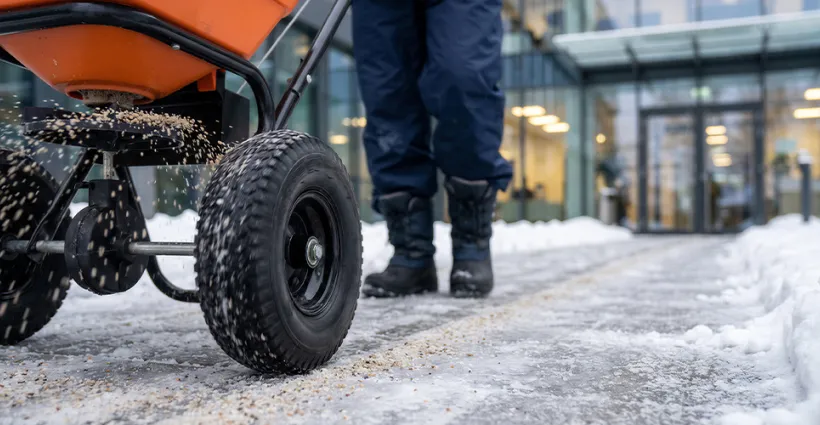
Consider a loading dock that has operated without problems all fall. Overnight, runoff freezes across the pedestrian route between the parking area and the dock entrance. Employees are still doing the same work and using the same entrance, but one of the conditions that made that routine safe has changed.
For General Industry, OSHA’s walking-working surfaces standard makes that a concrete safety issue. It requires surfaces to be maintained free of hazards such as snow and ice. Walking-working surfaces must also be inspected regularly and as necessary, with hazardous conditions corrected or guarded before employees use them again.
The same principle applies beyond walkways. Freezing conditions can affect access to outdoor equipment, vehicle traction, and the safe use of exterior stairs or gates. The task may look unchanged on paper, but the conditions surrounding it may no longer support the same approach.
There is no single temperature that captures every change worth reviewing. NIOSH notes that near-freezing temperatures can be a cold-stress factor in regions not accustomed to winter weather. The trigger is when colder conditions begin to change how people access the work, perform it, or experience the exposure.
Use the First Freeze to Review What Changed
A first-freeze review does not need to reopen every risk assessment in the organization. Focus on work where freezing conditions have changed how the task is accessed, performed, or controlled.
Start with areas most exposed to those changes, such as outdoor access points, walking routes, loading areas, mobile equipment paths, exterior inspections, and work that now depends on temporary winter controls.
Then ask:
Can workers still reach and perform the task as the procedure assumes?
Did traction, access, visibility, or vehicle movement change?
Did a temporary control create another concern?
Does an inspection need to happen earlier or more often?
Does the work method or equipment need to change?
Organizations should identify where normal assumptions no longer hold and determine what needs another look.
This review does not turn every weather event into a formal PSM process. OSHA’s MOC requirements under 29 CFR 1910.119 apply to changes affecting covered processes. Used more broadly as a management discipline, the same basic approach helps teams focus on the operational consequences of changed conditions.
When Conditions Change, the Control May Need to Change Too
Once the review identifies a meaningful change, the response should address the condition that changed.
If water repeatedly freezes across an entrance, another reminder to “watch your step” does little to correct the problem. The response may need to address drainage, treat the surface earlier, change the access route, or restrict the area until the hazard is corrected.
The same principle applies when the task itself has not changed. A technician may still need to inspect an outdoor unit, but ice or accumulated snow could make the normal route unsuitable. The inspection requirement remains the same. How the worker reaches and performs it may need to change.
Temporary winter measures need the same review. Portable heat or a temporary pedestrian route may solve an immediate problem while changing other conditions around the work.
Training comes in when those decisions change what workers need to know or do. Employees may need instructions on a new access route, a revised work method, or cold-stress precautions. HSI’s cold stress training can support that part of the response.
Training can reinforce a changed control or procedure. It cannot correct a physical condition or replace a control that no longer works.
Connect the Winter Risk Review to Inspections, Observations, and Follow-Up
A first-freeze review only works if the findings lead to action. Winter conditions keep changing, and a control that works after the first freeze may not hold up after the next round of precipitation, thawing, or refreezing.
Those changes make continued field feedback important. Repeated ice at the same doorway, problems with a temporary route, or a failed seasonal control should not remain isolated inspection findings. They need to feed into corrective action and follow-up.
HSI helps safety teams keep that process connected so they can:
Turn field findings into action: Observations and inspection results can feed into corrective actions and follow-up tasks instead of relying on separate emails, spreadsheets, or informal reminders.
Keep responsibility visible: Assigned actions, notifications, and change workflows give teams a clearer view of what needs attention and who owns the next step.
See whether the fix actually worked: MOC supports post-change review, while hazards and observations provide continued feedback from the field.
Catch recurring problems before they become routine: Connecting observations, inspections, and corrective actions makes it easier to see when the same winter issue keeps resurfacing.
The result is a clearer line from identifying a changed condition to addressing it and confirming that the control continues to work.
If your team needs a better way to turn seasonal risk reviews into consistent action, see how HSI MOC can support the process from assessment through follow-up.
FAQ
Does OSHA Have a Cold Weather Safety Standard?
OSHA does not have a specific standard for working in cold environments. However, employers still have a duty to protect workers from recognized cold-weather hazards that can cause serious harm. OSHA recommends using engineering controls, safe work practices, appropriate protective clothing, and cold-weather training.
What Temperature Is Too Cold to Work Outside Under OSHA?
OSHA does not set a single federal temperature at which outdoor work must stop. Cold risk depends on the conditions, including wind, moisture, exposure time, and the work being performed. NIOSH notes that even near-freezing temperatures can create cold-stress concerns in regions not accustomed to winter weather.
Does OSHA Require Employers to Remove Snow and Ice From Workplace Walkways?
For general industry, OSHA requires walking-working surfaces to be maintained free of hazards such as snow and ice. Hazardous conditions must be corrected before employees use the surface again. If the problem cannot be corrected immediately, access must be guarded until it is safe.
How Often Should Employers Inspect Workplace Walkways for Snow and Ice?
OSHA does not prescribe a fixed inspection schedule. Under 29 CFR 1910.22, walking-working surfaces must be inspected “regularly and as necessary.” After freezing temperatures, precipitation, melting, or refreezing, conditions may change quickly enough to justify additional inspections.
Does Cold Weather Require a Management of Change Review?
Not as a general OSHA requirement. Formal MOC requirements under 29 CFR 1910.119 apply to covered Process Safety Management processes. Other workplaces can still use the same change-management principle when freezing conditions alter access, equipment use, work methods, or existing controls.
Related Articles
Cold Weather Preparedness for Utilities
Utilities and generation facilities must take a proactive, system-wide approach to winter readiness.
Industrial Skills
Extreme Cold Weather Grid Operations and Preparedness: From SAR Recommendations to EOP-012-3 Compliance
NERC’s Extreme Cold Weather Grid Operations, Preparedness, and Coordination initiative is a shift in how the electric...
Industrial Skills
How AI is Transforming Safety: From Finding Hazards to Preventing Incidents
Learn how AI improves hazard recognition, corrective actions, and safety training while supporting OSHA compliance and...
Workplace Safety