Heart Month Safety Check: Are AEDs Accessible Where You Live, Work, and Play?
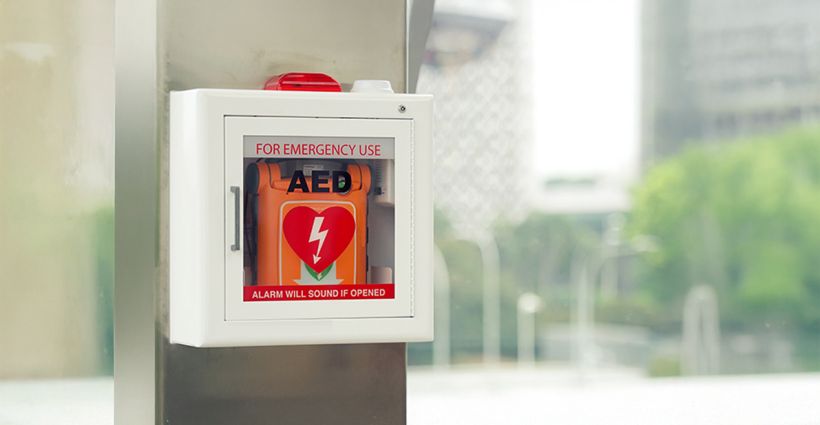
February is Heart Month, a time dedicated to raising awareness about heart health and reducing preventable deaths from cardiac emergencies. One of the most impactful (and often overlooked) ways to do that is by ensuring an automated external defibrillator (AED) is accessible in the places people spend the most time.
When sudden cardiac arrest strikes, having quick access to an AED can mean the difference between life and death. But accessibility isn’t just about owning a device. It’s also about placement, visibility, maintenance, and training.
This Heart Month, take a look around the spaces you’re in every day and ask yourself one critical question: If a cardiac emergency happened here, could someone reach an AED quickly enough to make a difference?
Checking for AED accessibility
Cardiac arrest does not wait for ideal conditions. It can happen at work, at school, during a workout, or while running errands. In the United States, survival rates for out-of-hospital cardiac arrest remain low, largely because defibrillation doesn’t happen fast enough. Research consistently shows that early defibrillation paired with high-quality cardiopulmonary resuscitation (CPR) significantly improves chances of survival and the likelihood of a good neurological outcome.
Automated external defibrillators are designed to be used by everyday people, not just medical professionals or first responders. These portable devices provide clear voice prompts and visual instructions that guide users step by step, making the use of AEDs more accessible in high-stress situations. But even the most user-friendly AED can’t help if no one knows where it is. That’s why accessibility matters, and why it’s worth taking a closer look at how prepared a space really is.
A true accessibility check includes asking:
- Is there an AED on-site? Is it located near high-traffic or high-risk areas where a cardiac emergency is more likely to occur?
- Is it visible and easy to reach? Could someone access it within minutes without a key or special permission?
- Is the AED clearly marked with signage that’s easy to spot in an emergency? Would someone unfamiliar with the space be able to find it quickly?
- Has the device been checked to ensure it is functional and ready for use as part of regular maintenance? Are replacement AED pads and batteries available and up to date?
- Is the AED included in your emergency response plan or safety procedures? Do staff members know where it is and how to use it?
If the answer to any of these questions is “no” or “I’m not sure,” there’s an opportunity to improve readiness and help ensure the people who use the space are better protected.
Best practices for AED placement
Once you’ve identified gaps in accessibility, the next step is making sure AEDs are placed where they can actually be used when they’re needed most. Thoughtful placement helps reduce hesitation, confusion, and delays during cardiac emergencies.
Here are common settings where AED placement is especially important for workplace safety and public preparedness, yet often inconsistent:
- Businesses and work environments. Offices, warehouses, construction sites, and other work settings should place AEDs in central, high-traffic areas such as near entrances, break rooms, or main corridors. Devices that are locked away, hidden, or restricted to certain staff members may delay response when every second matters.
- Schools and sports facilities. Schools, gyms, and athletic fields should prioritize AED placement near activity areas where physical exertion is common. Coaches, teachers, and staff should know exactly where devices are located and be trained to respond quickly if a student, athlete, or spectator collapses.
- Public buildings and transit. Libraries, government buildings, train stations, and similar public spaces serve a wide range of visitors every day. AEDs in public locations should be clearly visible, well-marked, and easy to access for anyone — not just employees or security personnel.
- Shopping centers and recreation areas. Malls, theaters, parks, and community centers are often busy and spread out, which can make response time a challenge. Placing AEDs near entrances, customer service areas, or fitness spaces helps ensure quick access during a cardiac emergency.
AED devices are most effective when they’re easy to find. Placing them near first aid kits, clearly marking their location, and keeping access simple helps ensure faster response in critical moments.
Many organizations also look to local regulations and industry standards when determining AED placement and maintenance. While requirements vary by location, public access defibrillator programs and public health guidance consistently emphasize placing AEDs where they can be accessed quickly and incorporating them into a broader cardiac emergency response plan.
AEDs at home and on-the-go
Although most out-of-hospital cardiac arrests occur in residences, AEDs are still far less common in homes. For individuals with family members at higher risk — such as those with heart disease, arrhythmias, or a history of cardiac events — discussing a home AED with a healthcare provider may be worth considering.
Portable AEDs are also worth considering in settings where fixed devices aren’t readily available. Camping activities, outdoor events, sporting tournaments, and field-based programs often involve physical exertion and longer emergency response times. In these situations, keeping a portable AED with other emergency supplies can help bridge the gap until medical services arrive.
The HSI AED & Equipment Manager makes it easy to track, maintain, and manage AEDs and other equipment for both your business and your customers. With a subscription, your organization can get unlimited access for all users and devices, plus 15% off AEDs and AED supplies from HSI. Current HSI Training Centers can login to Otis to signup. If you have questions about the AED and Equipment manager, email AED@hsi.com.
CPR and AED training makes all the difference
Even the best AED placement can fall short if people aren’t prepared to take immediate action. Proper training plays an important role in reducing hesitation, building confidence, and ensuring that accessible equipment can actually be used during a cardiac emergency. When people know where AEDs are located and how to use them, response time improves — and so do outcomes.
Public safety is a shared responsibility, especially in schools, businesses, and public places where cardiac emergencies can happen without warning. Being prepared isn’t just about having an AED nearby; it’s about knowing it’s there and feeling ready to step in if someone needs help.
Whether you’re a business owner, educator, coach, volunteer, or concerned family member, CPR and AED training prepares you to step in when every second counts. Take a moment to think about the places you frequent most. Would you know where the nearest AED is, and would someone nearby know how to use it? Identifying gaps now creates opportunities to improve safety before an emergency happens.
Find your local HSI Training Center to get CPR, AED, and First Aid certified, and help make the spaces you live, work, and gather safer for everyone.
Need an AED for your facility or business? Talk to one of our AED specialists to find the right device for you at AED@hsi.com.
Related Articles
October is Sudden Cardiac Arrest Awareness Month
Sudden Cardiac Arrest Awareness Month, observed each October, focuses on spreading knowledge about sudden cardiac...
Emergency Care

Giving CPR to a Pregnant Person: What You Need to Know
Here’s some information to better understand how a woman’s body adapts during pregnancy & considerations to take when...
Emergency Care

Why Learning CPR is More Important Than You Think
Learn CPR! It's more important than you think. Cardiac arrest is a leading cause of death, but CPR and AED use can...
Emergency Care
